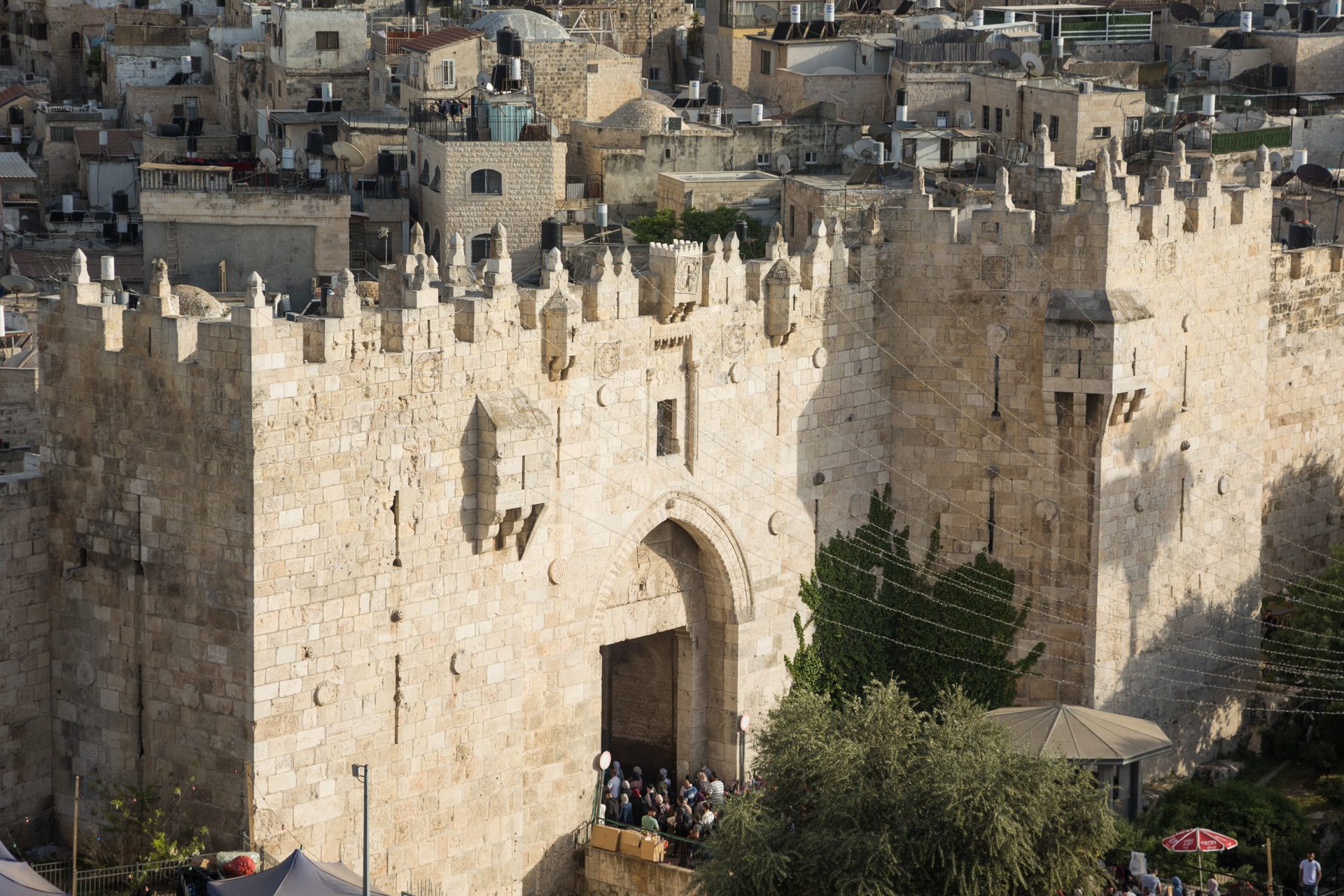
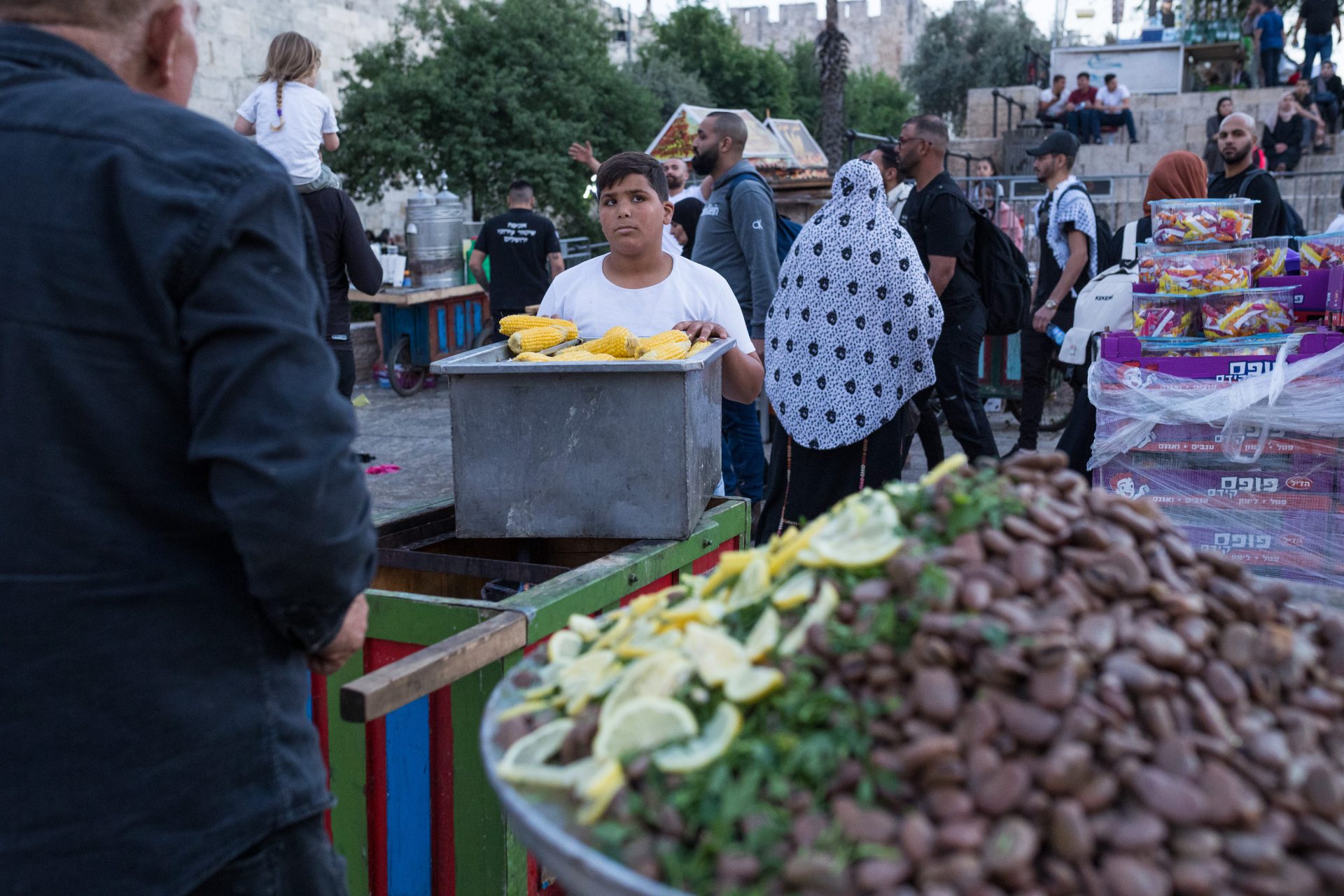
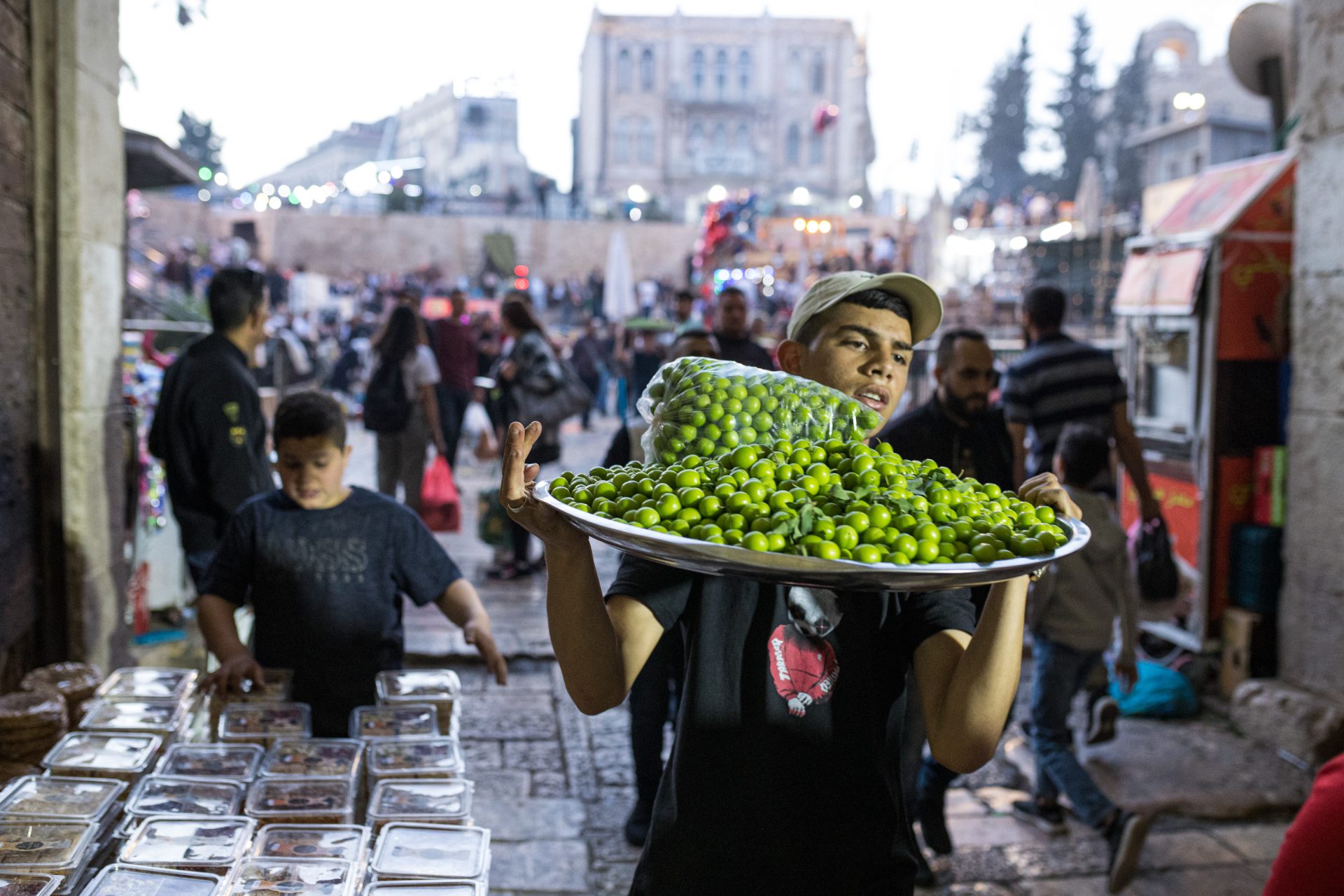
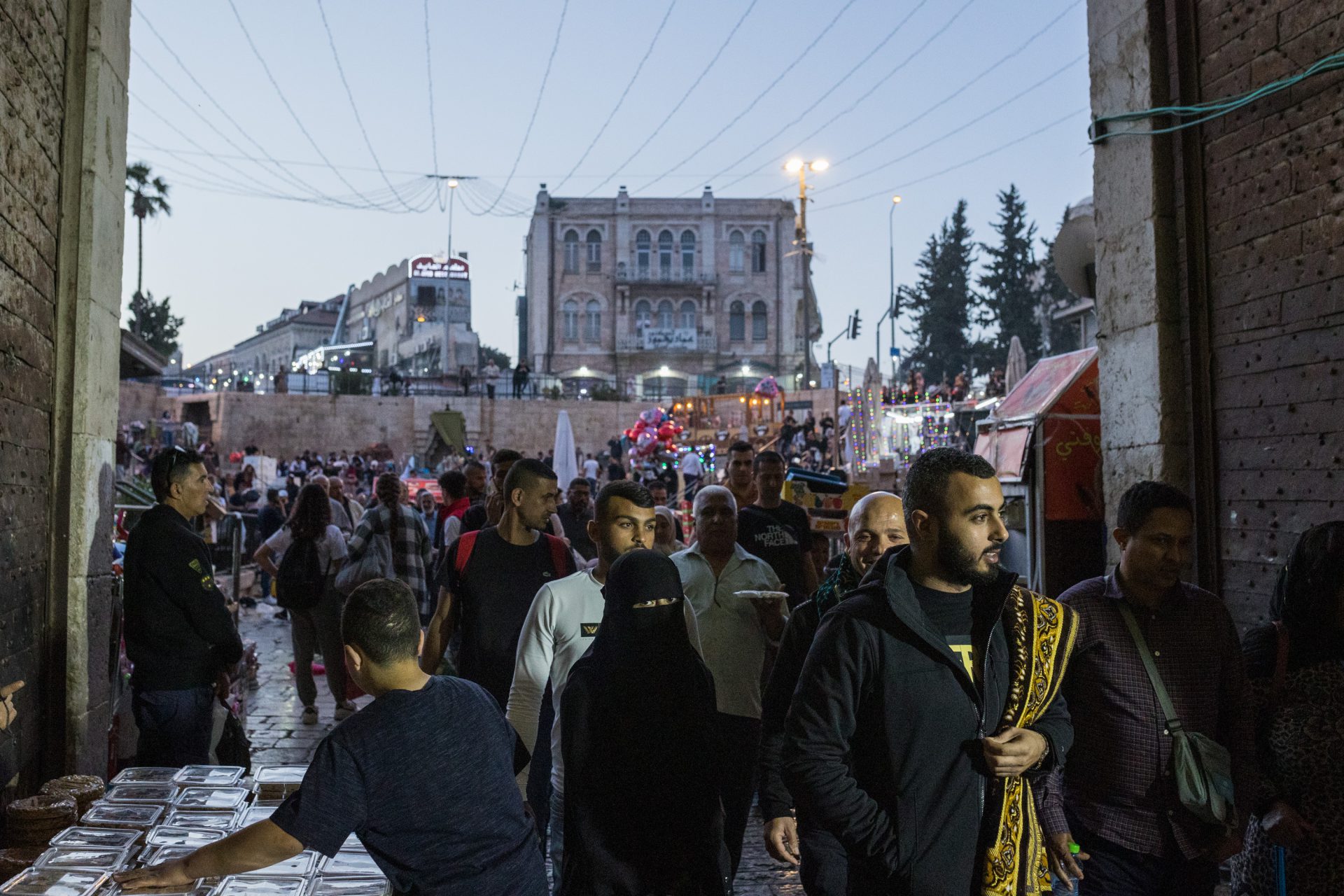
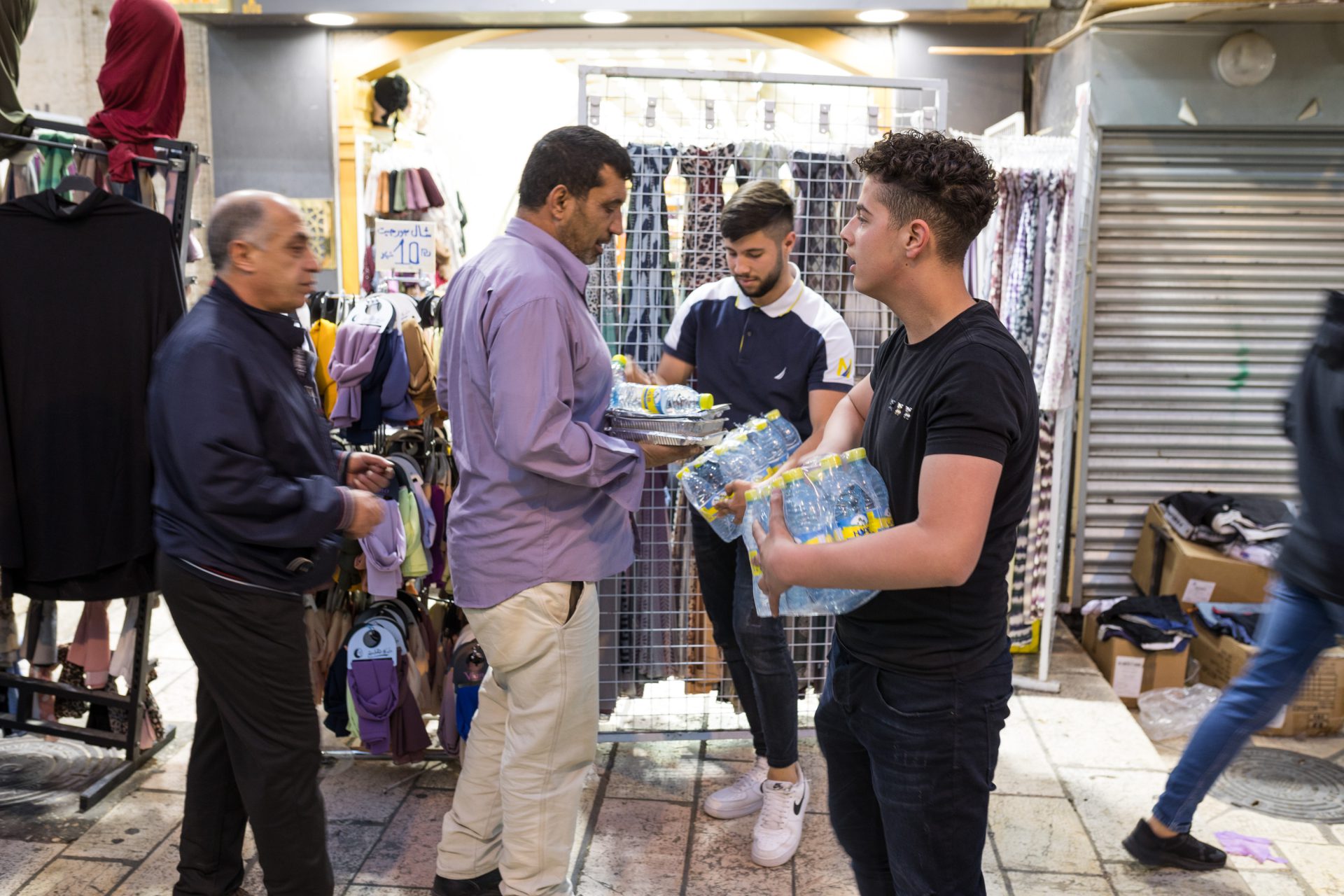
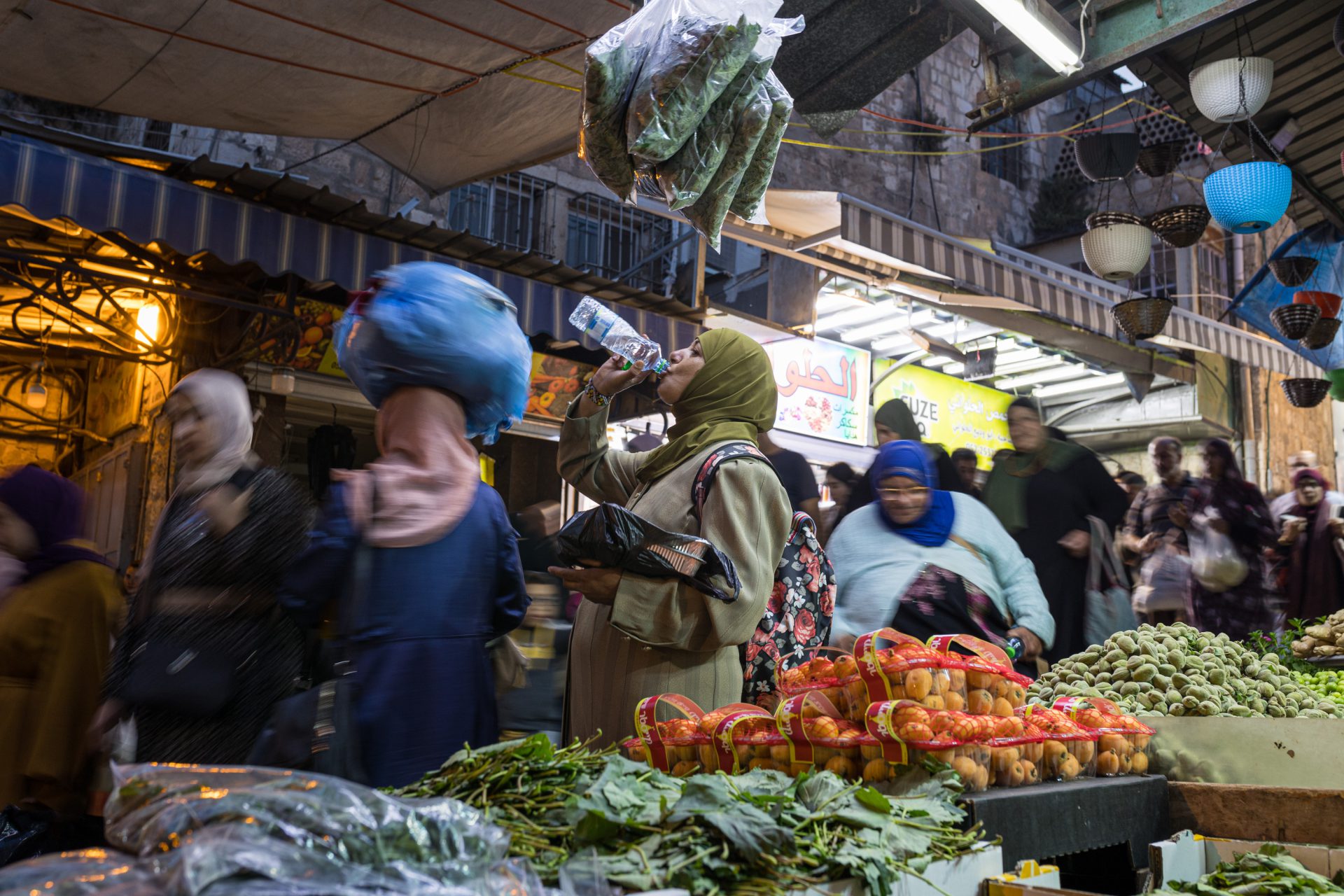
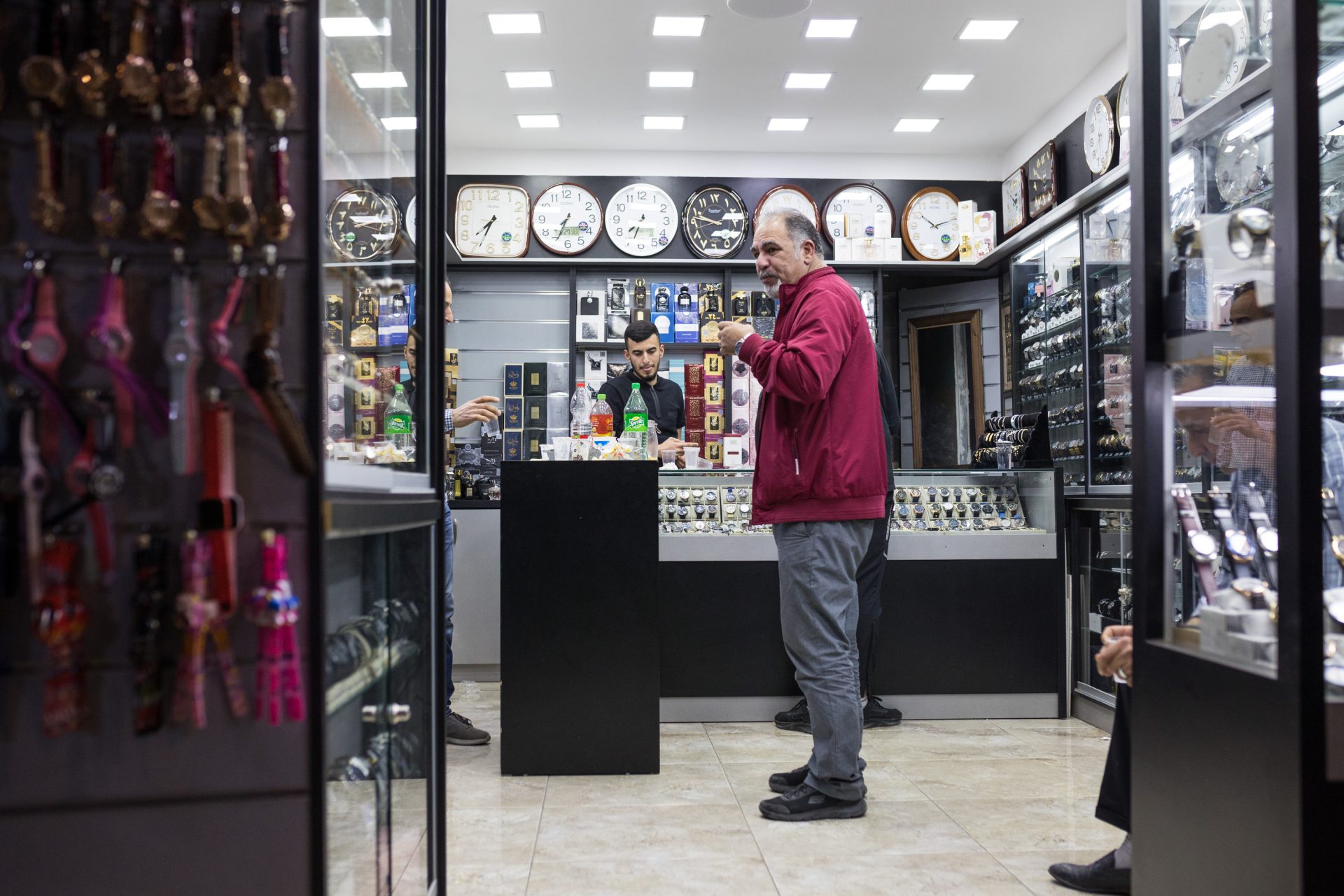
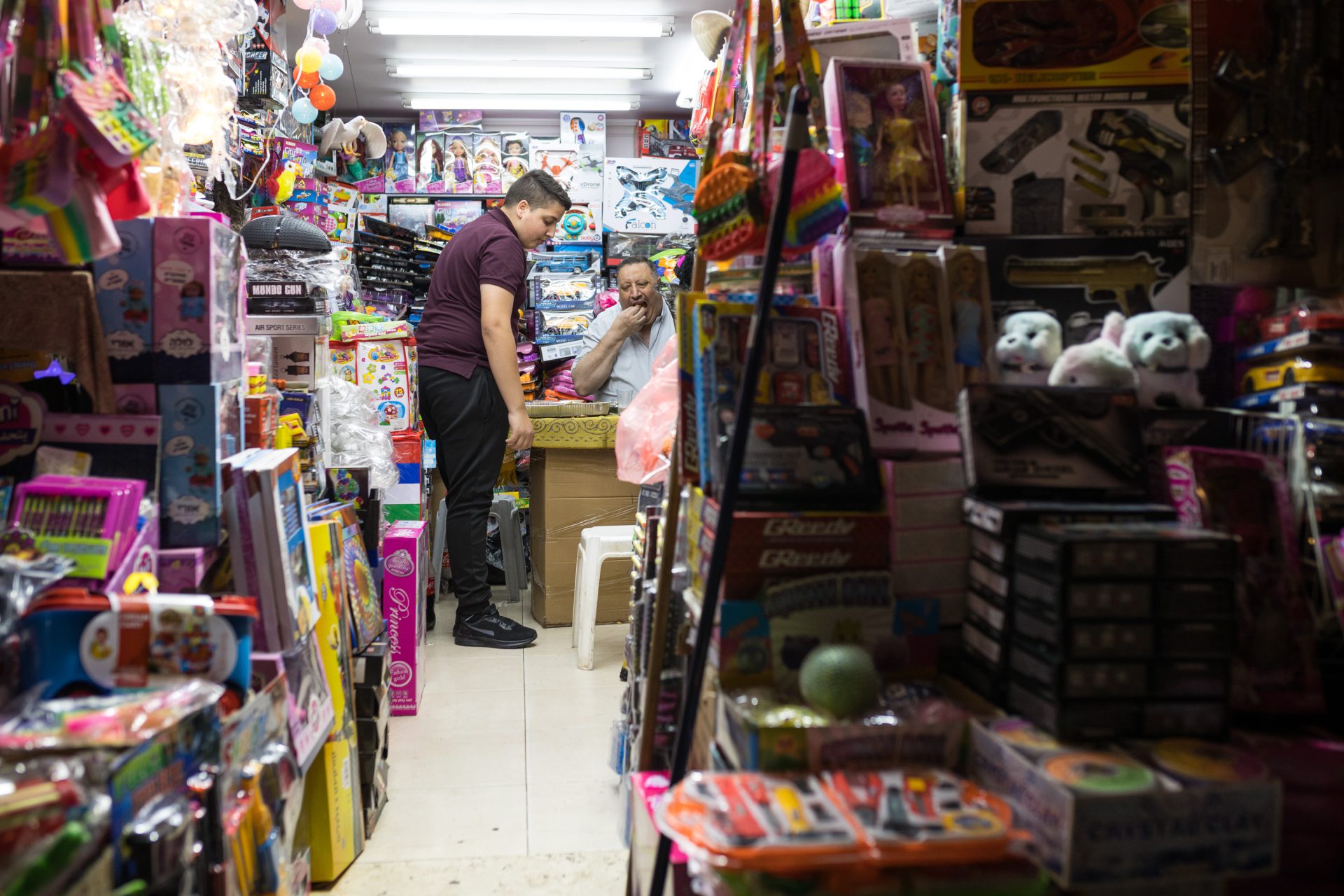
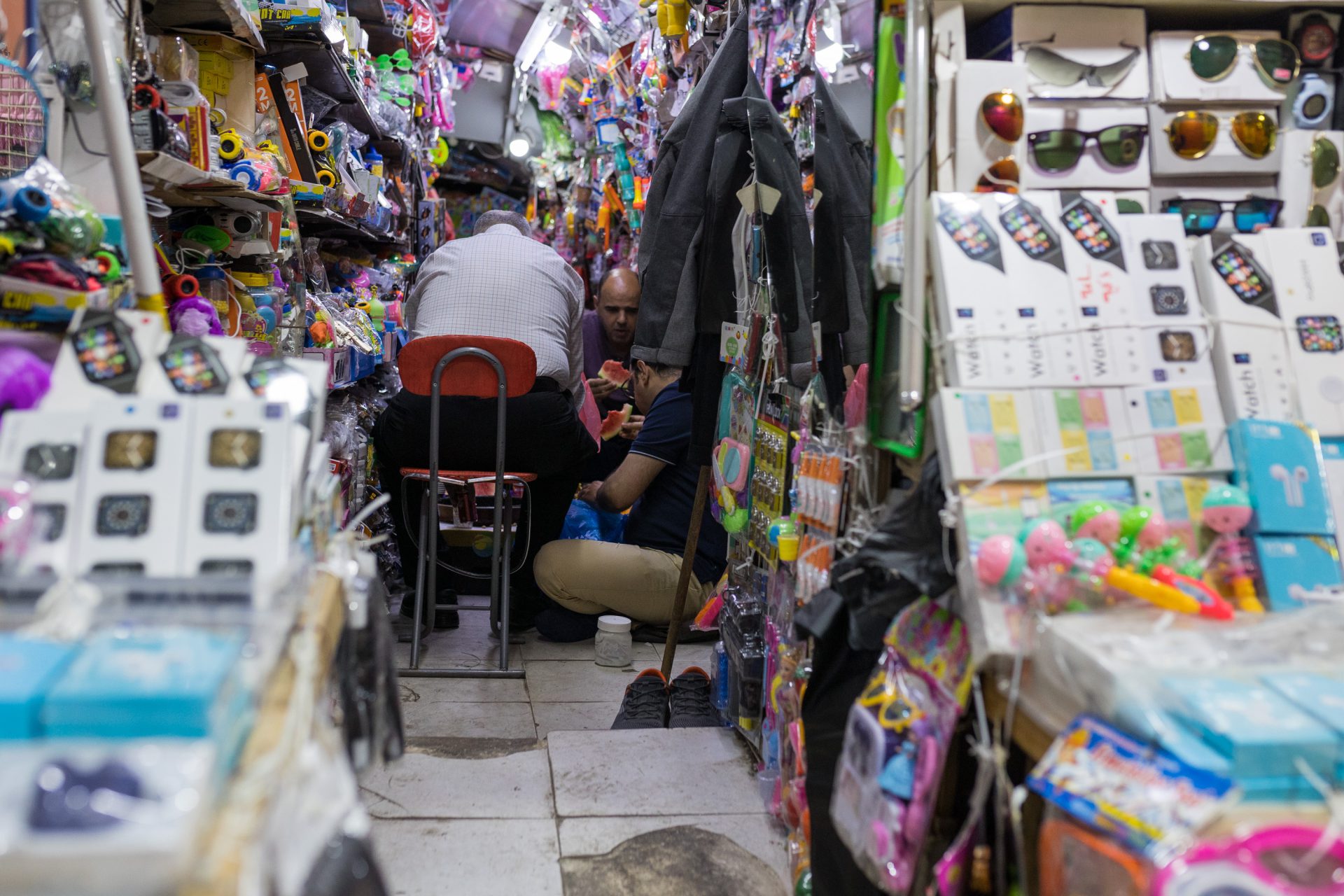
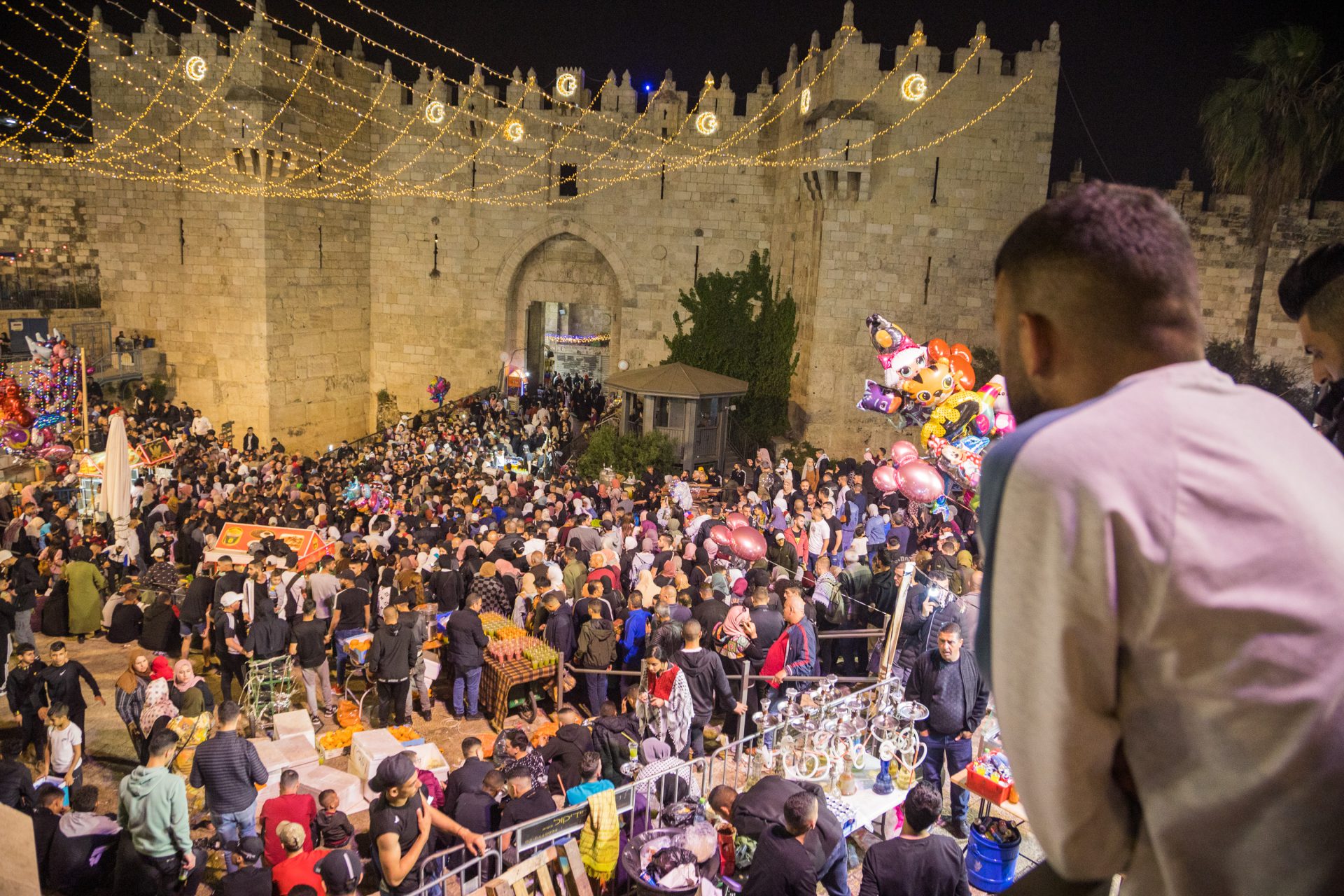
Wednesday was the night of al-Qadr, the holiest night of Ramadan, on which the Qur’an descended from heaven and was given to man. On al-Qadr, good deeds are multiplied and angels descend to carry prayers up to heaven. And there is no better place to say your prayers than the Al-aqsa compound. That is why tens of thousands of Muslims from all over the country come to Jerusalem to pray on this day. After a day-long Jerusalem Seminary, I realized that I happened on a perfect date to shoot in the Old City.
If you look at google’s calendar, you’d see it’s marked for Thursday (and not Wednesday). That’s because Nobody knows in advance when it’s going to be during Ramadan. It depends on the exact state of the moon and it’s determined only a day or two beforehand.
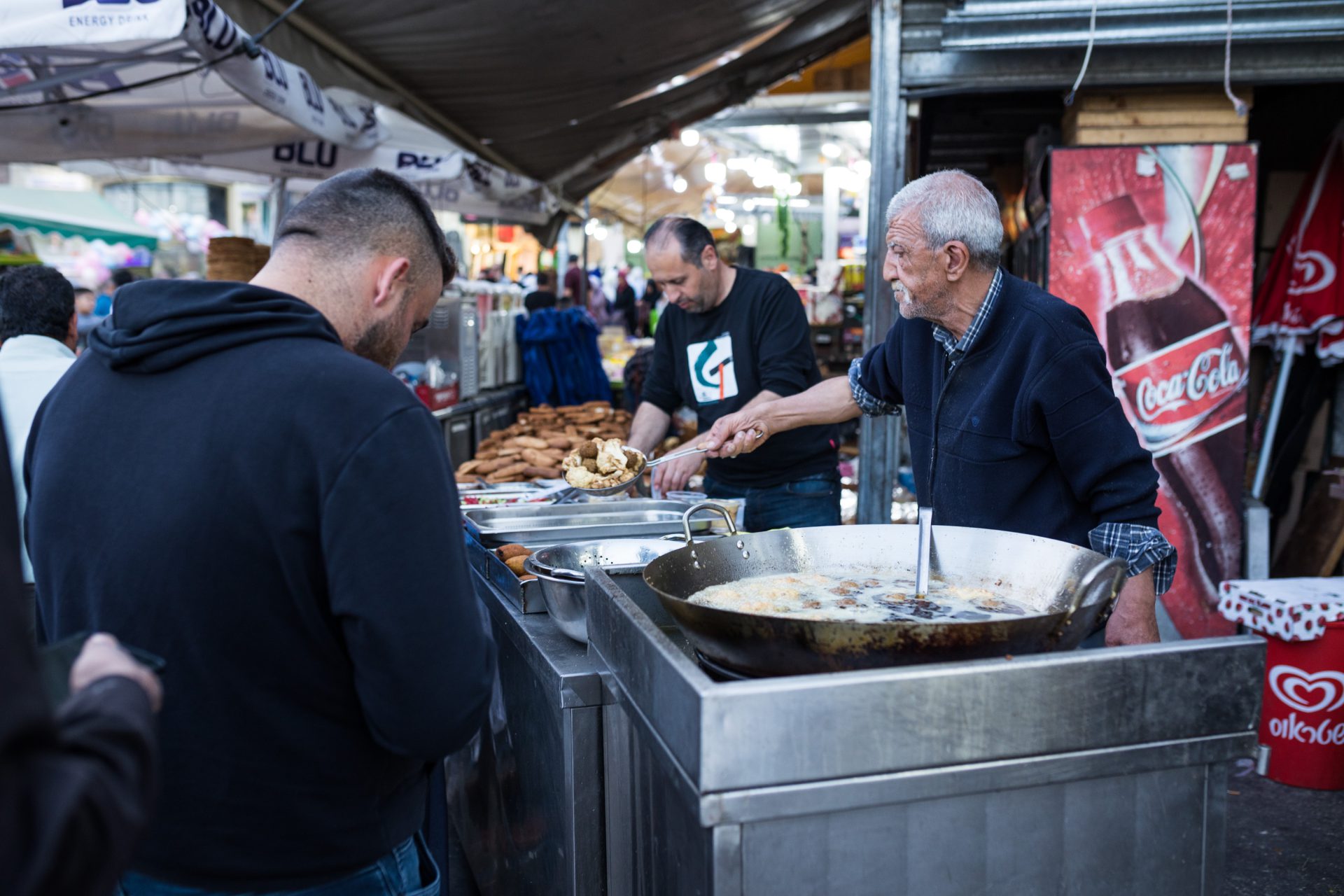
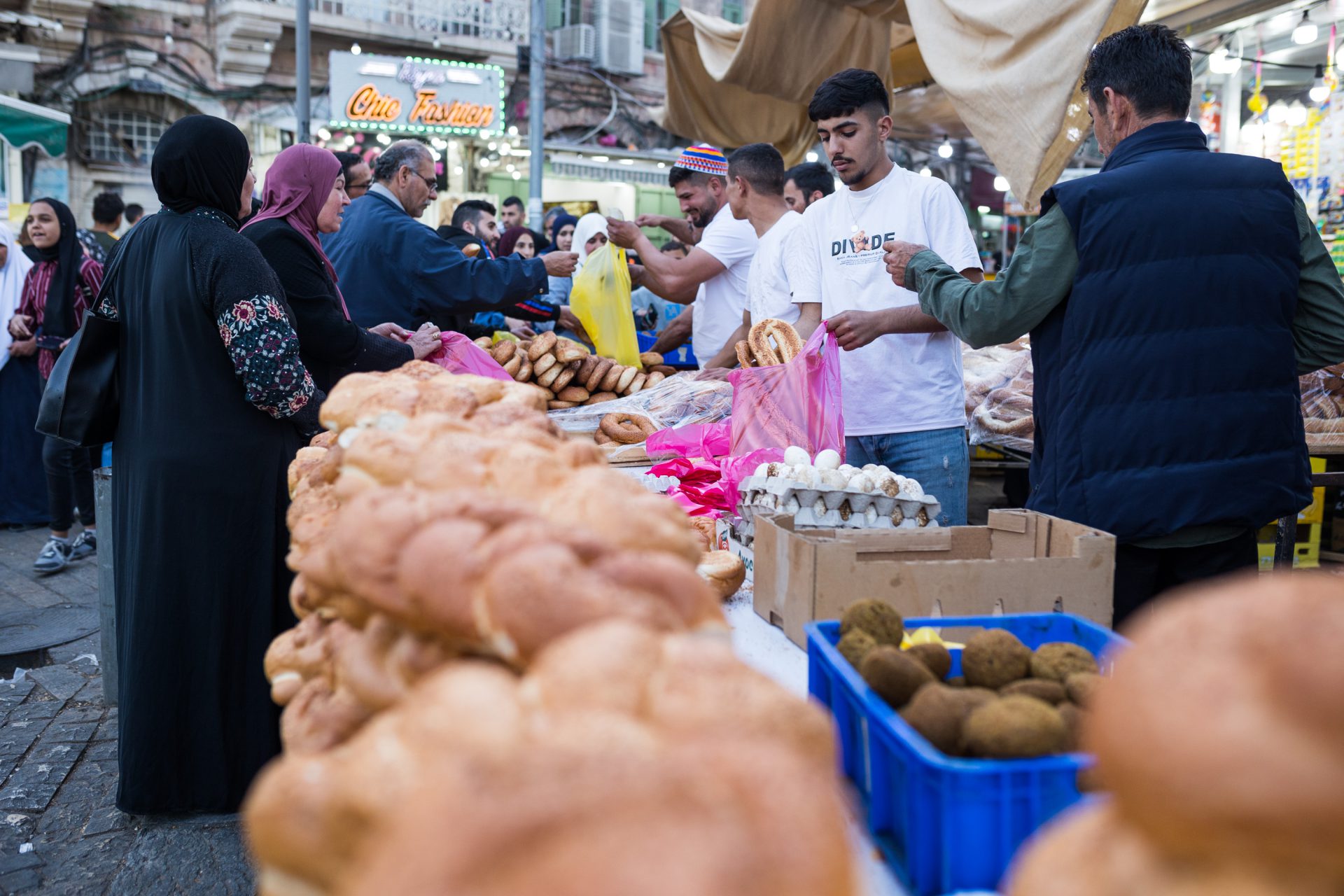
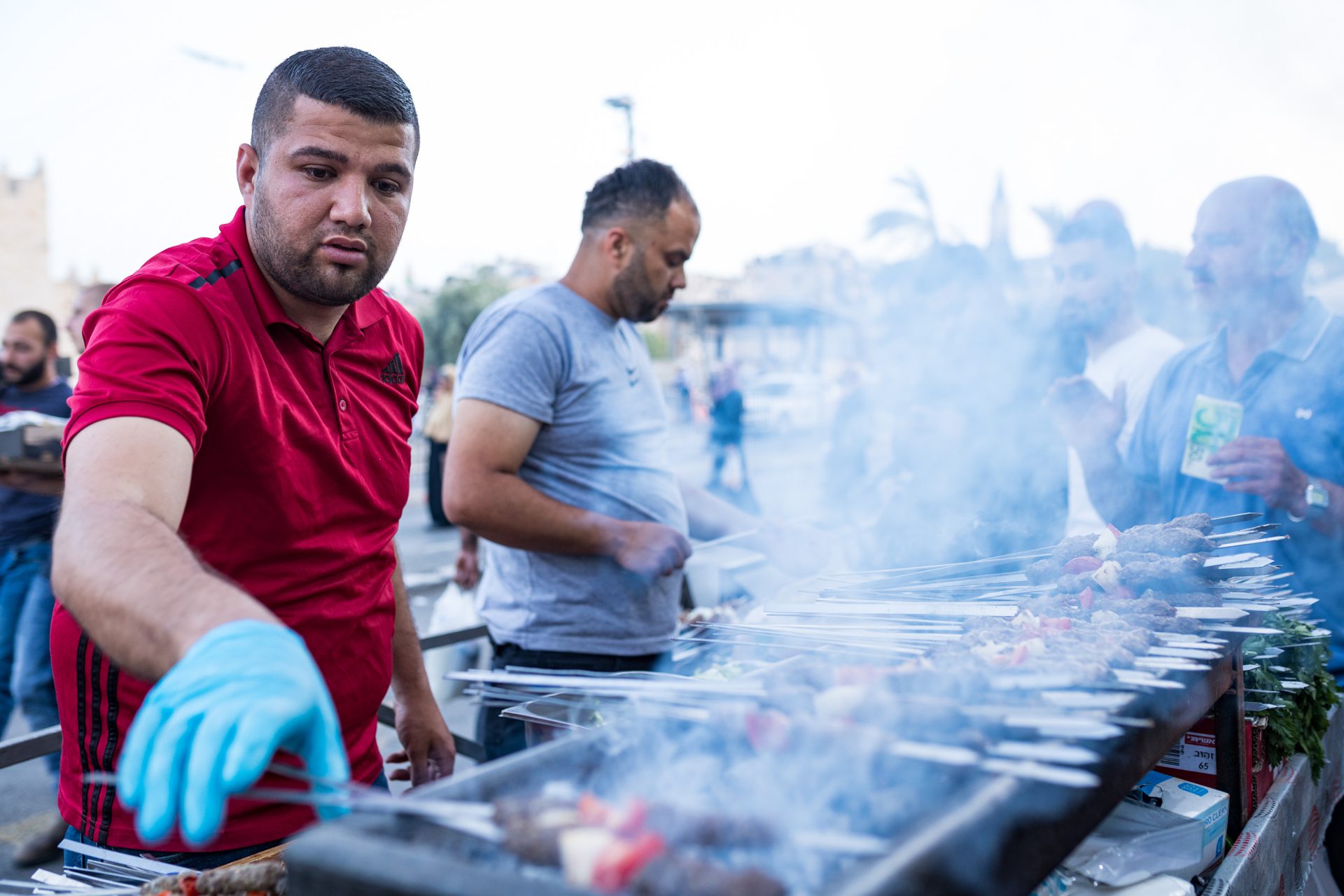
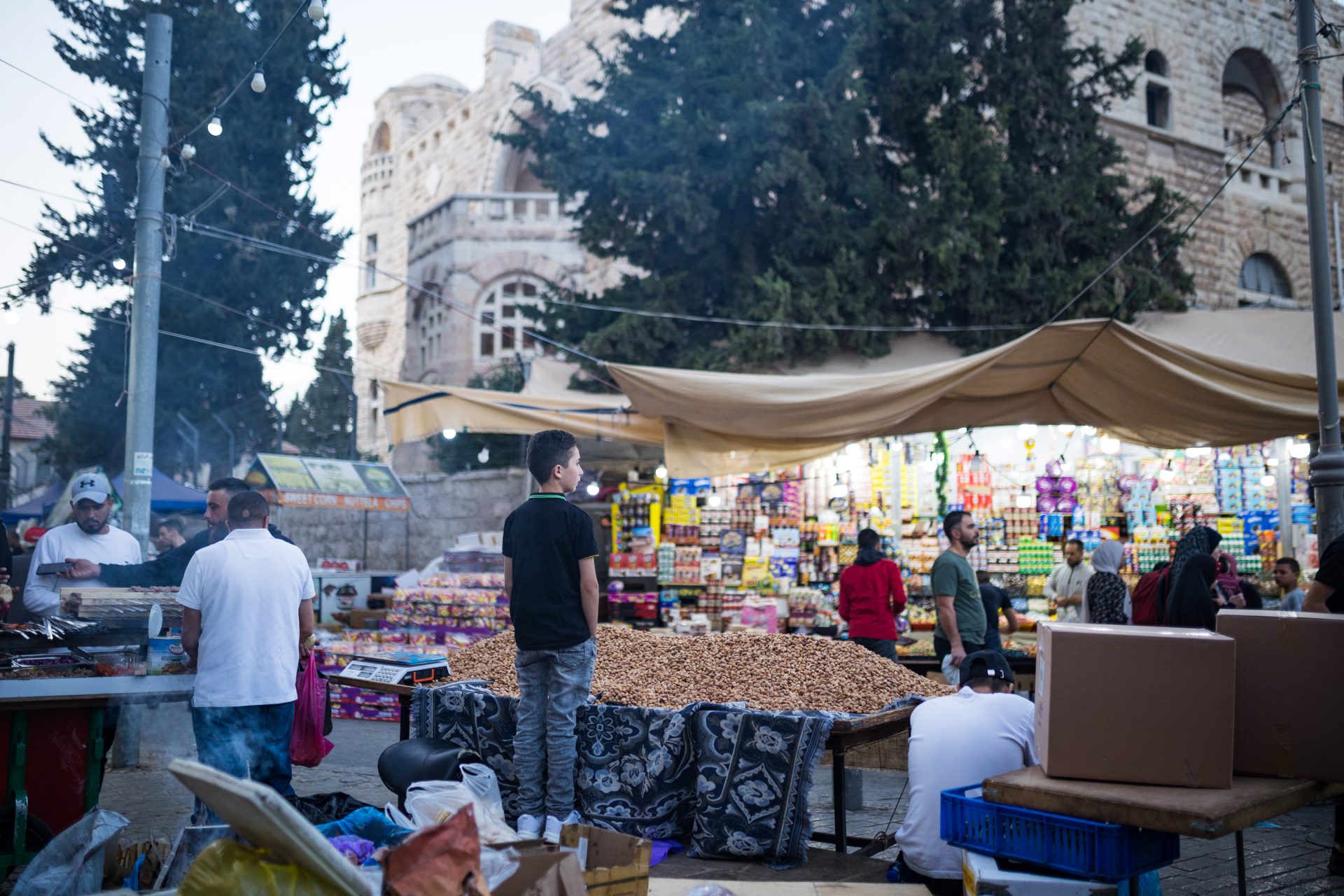
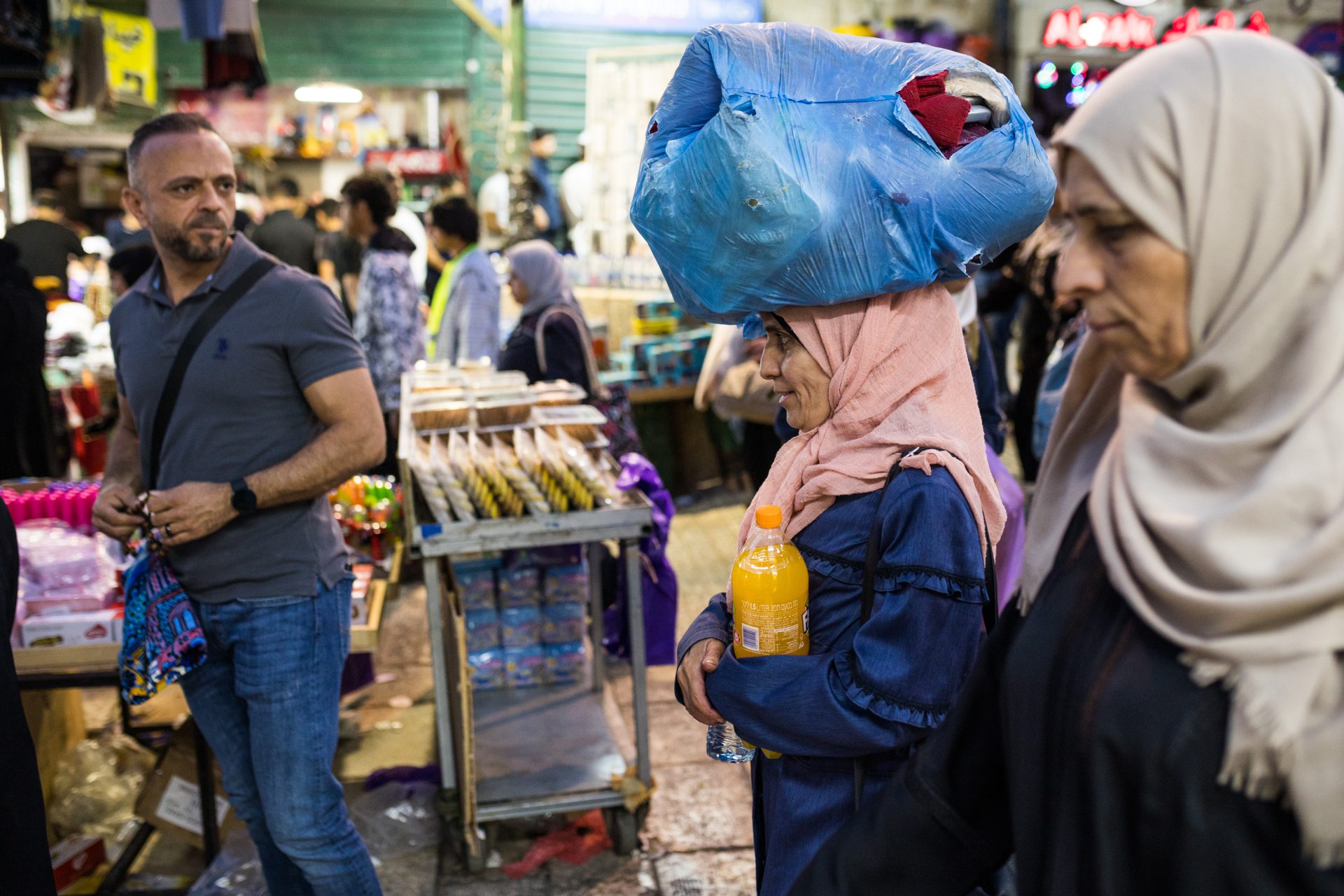
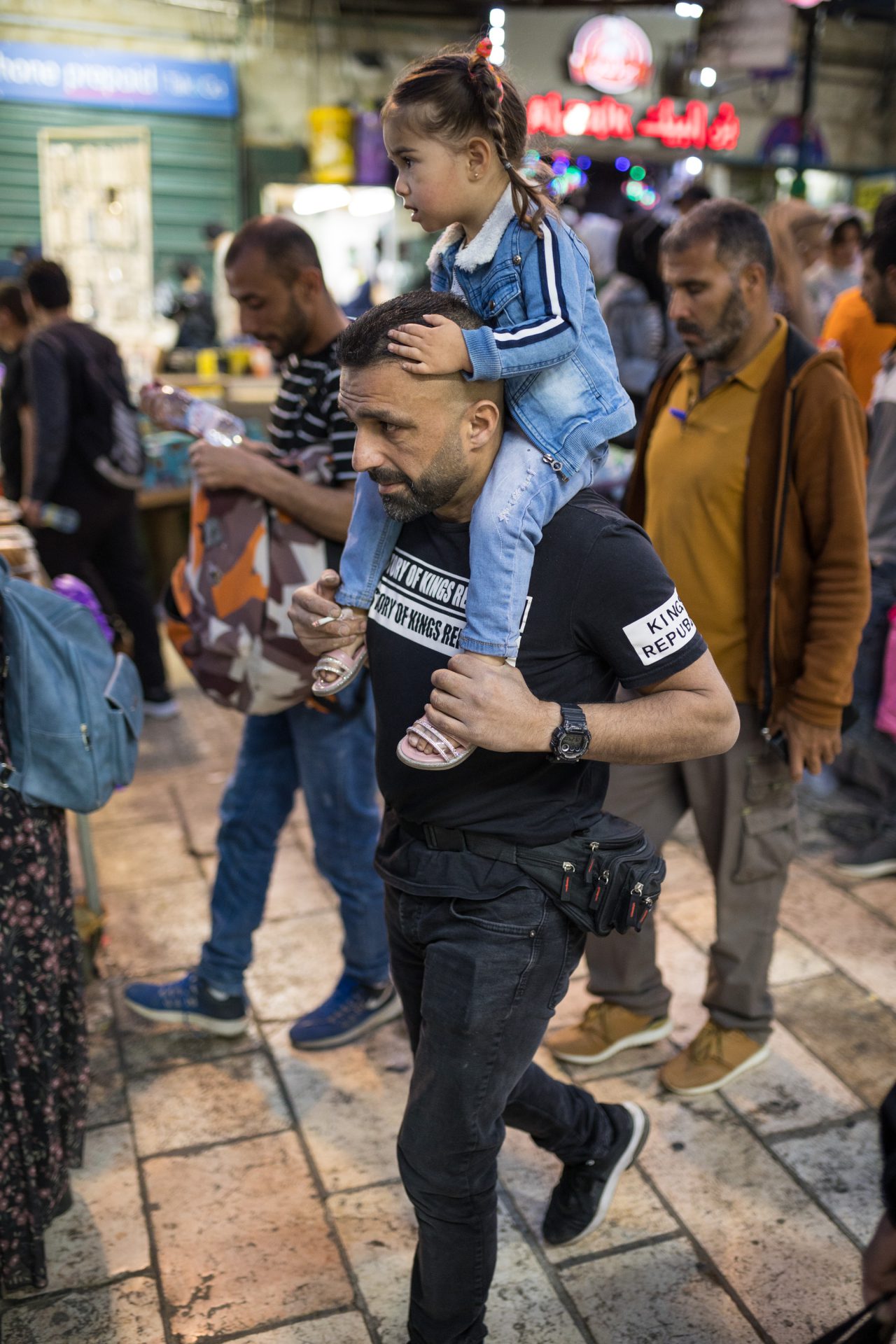
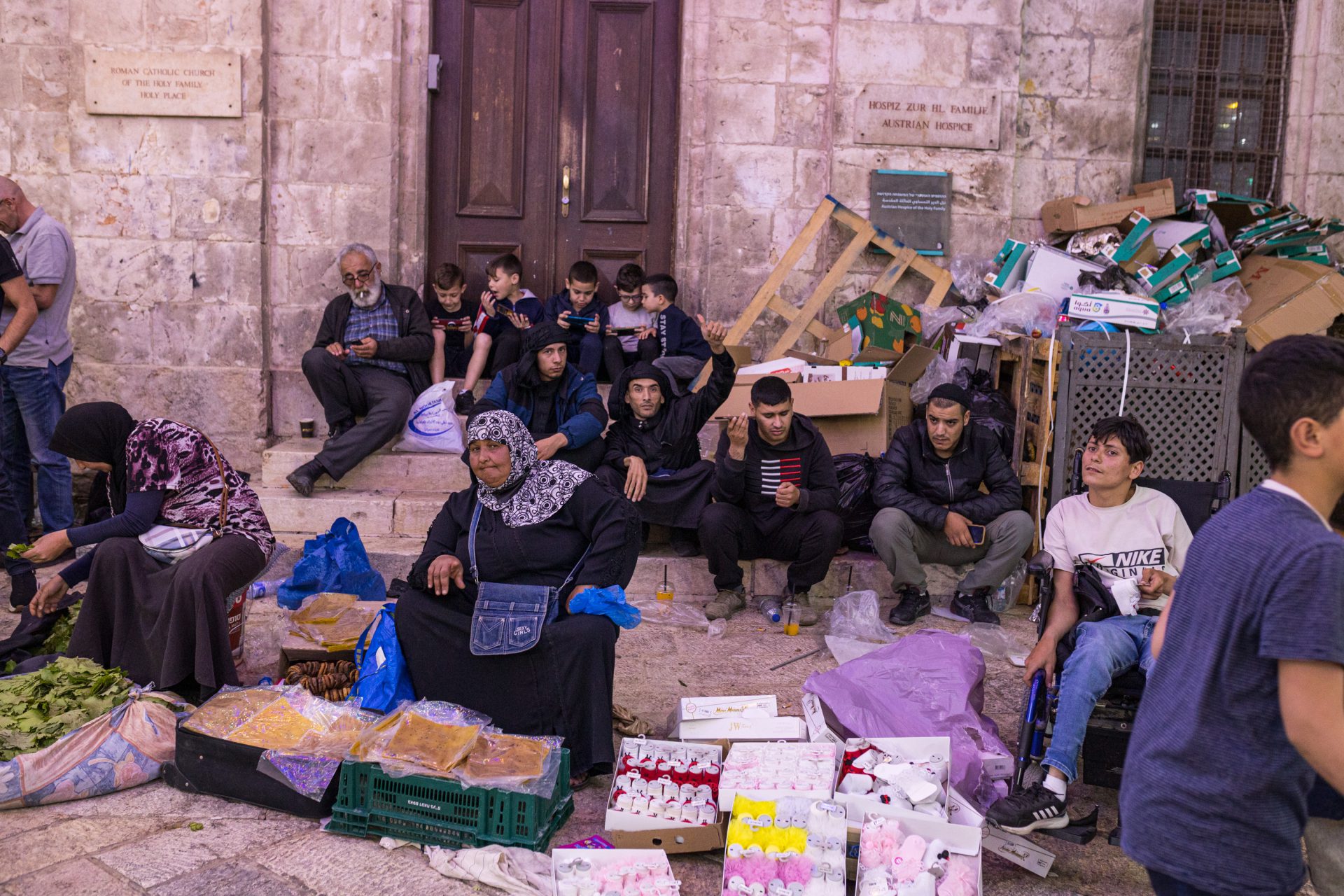
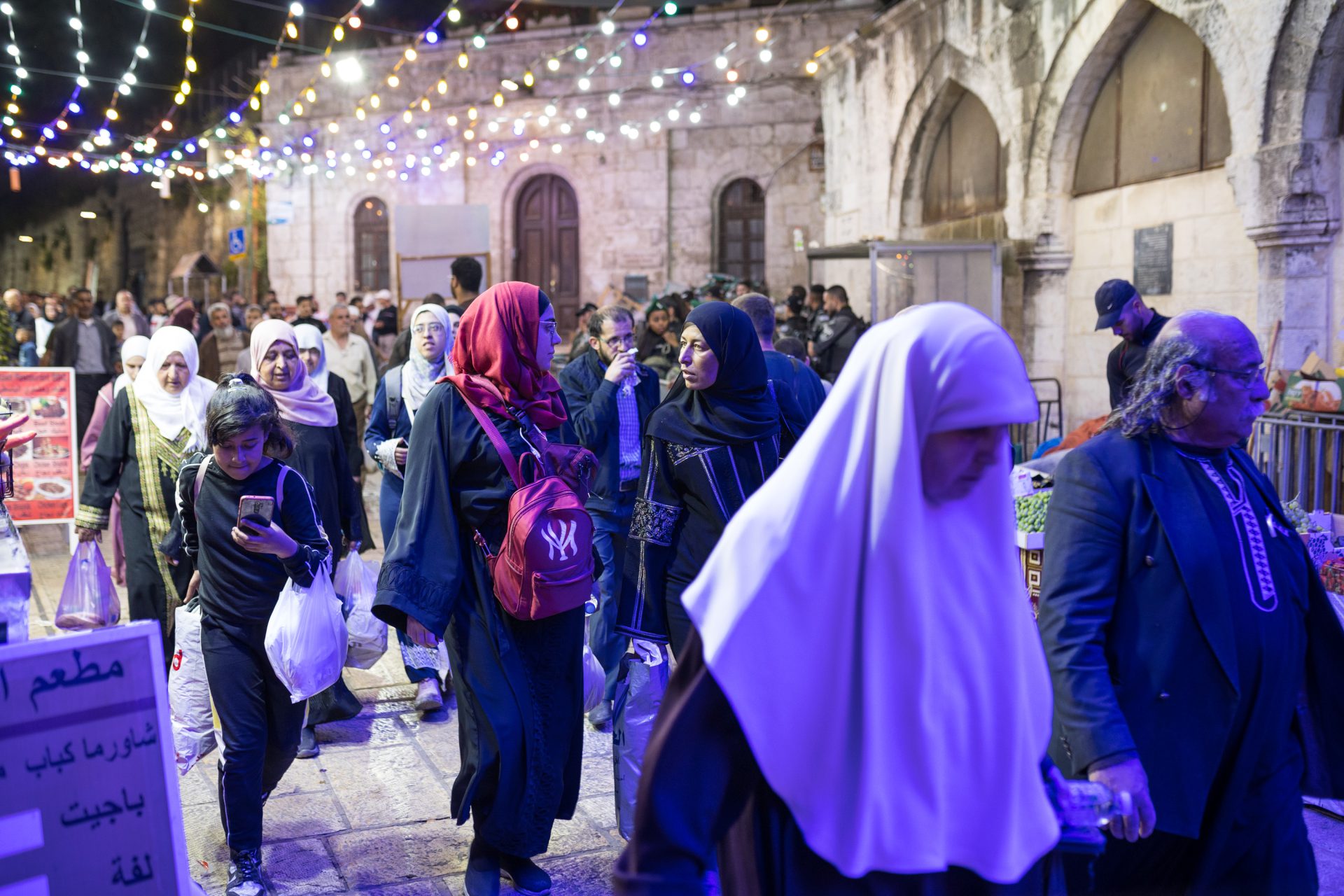
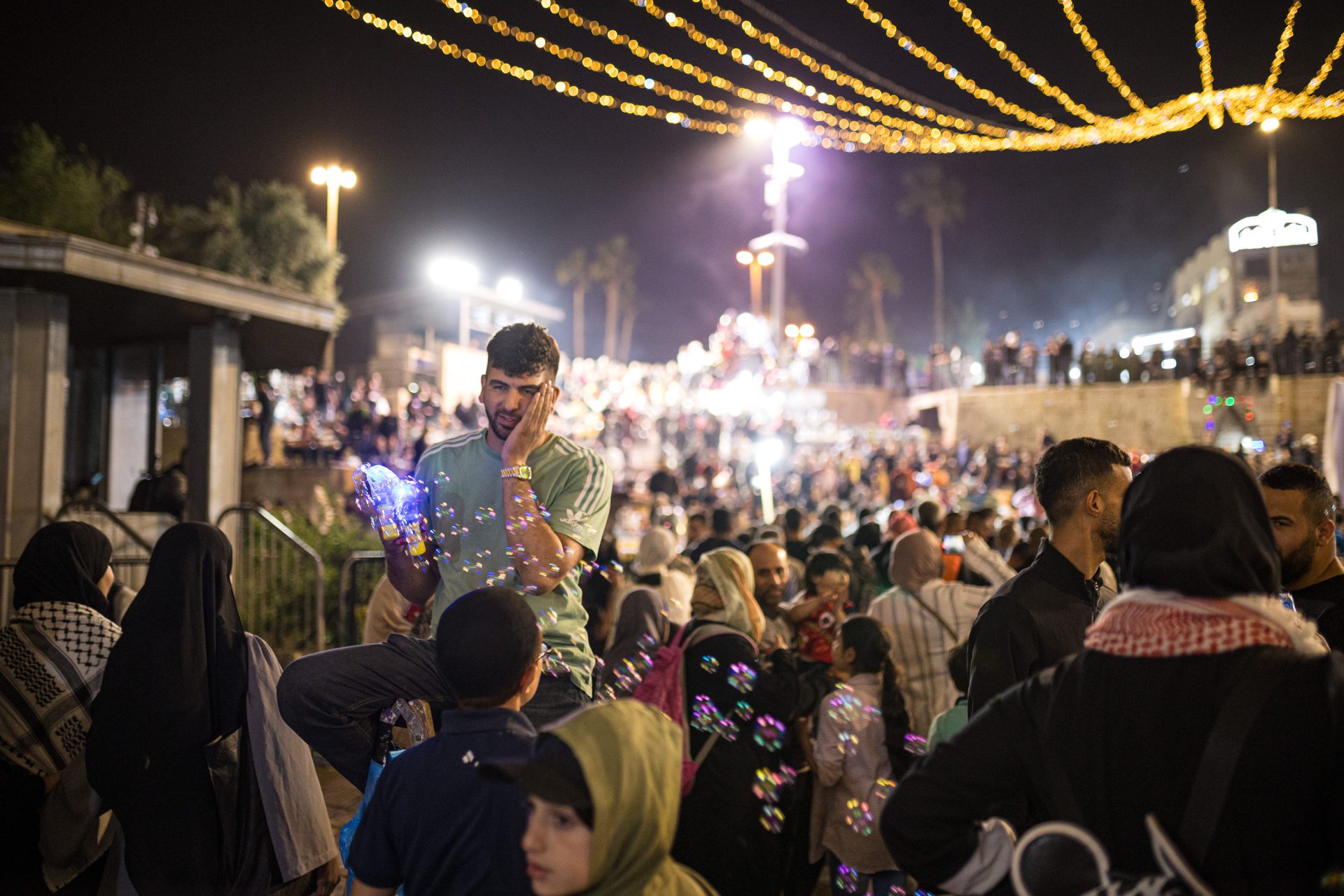
As it’s still during Ramadan, the event begins close to sundown, or to be more exact: close to breaking the daily fast (the Iftar meal). The Damascus Gate area, the heart of Palestinian Jerusalem, was filled with dozens of vendors selling everything imaginable: from toys to shish kebabs, green almonds to a bubble maker. The sun went down slowly as people began to flow into the walls of the old city. Swarms of people – elders helped by their canes, youngsters on electric bikes, women carrying their kids and teens laughing, each with his or her own goals: participating, taking selfies or praying.
I began to make my way to the gate plaza, browsing the stalls, photographing the people. I chatted with people who seemed easy going. I put on my tourist face, wearing hiking pants and leaving my camera hanging and looking very unprofessional. I didn’t see any other tourist. To be honest, I didn’t see anyone who was an “other” – not Jews, not tourists and not even media. Somewhat surprising, given the fact that this is Israel’s second largest annual mass event (after the Rashbi celebration on mount Meron).
I got in early enough, when there was still no problem moving around the old city. The first thing I noticed when walking into the market across the gate was both absurd and charming: right next to the guys selling 4 bottles of water for ten shekels, there were vendors who gave away water bottles to the people walking up to al-Aqsa – they literally shoved bottles in the hands of the people going to pray. It turns out that it happens every night on Ramadan, but on al Qadr it’s especially meaningful: handing out water and food to pilgrims. If you see an open package of dates on the way, don’t hesitate to take one – it was left there especially for the worshipers.
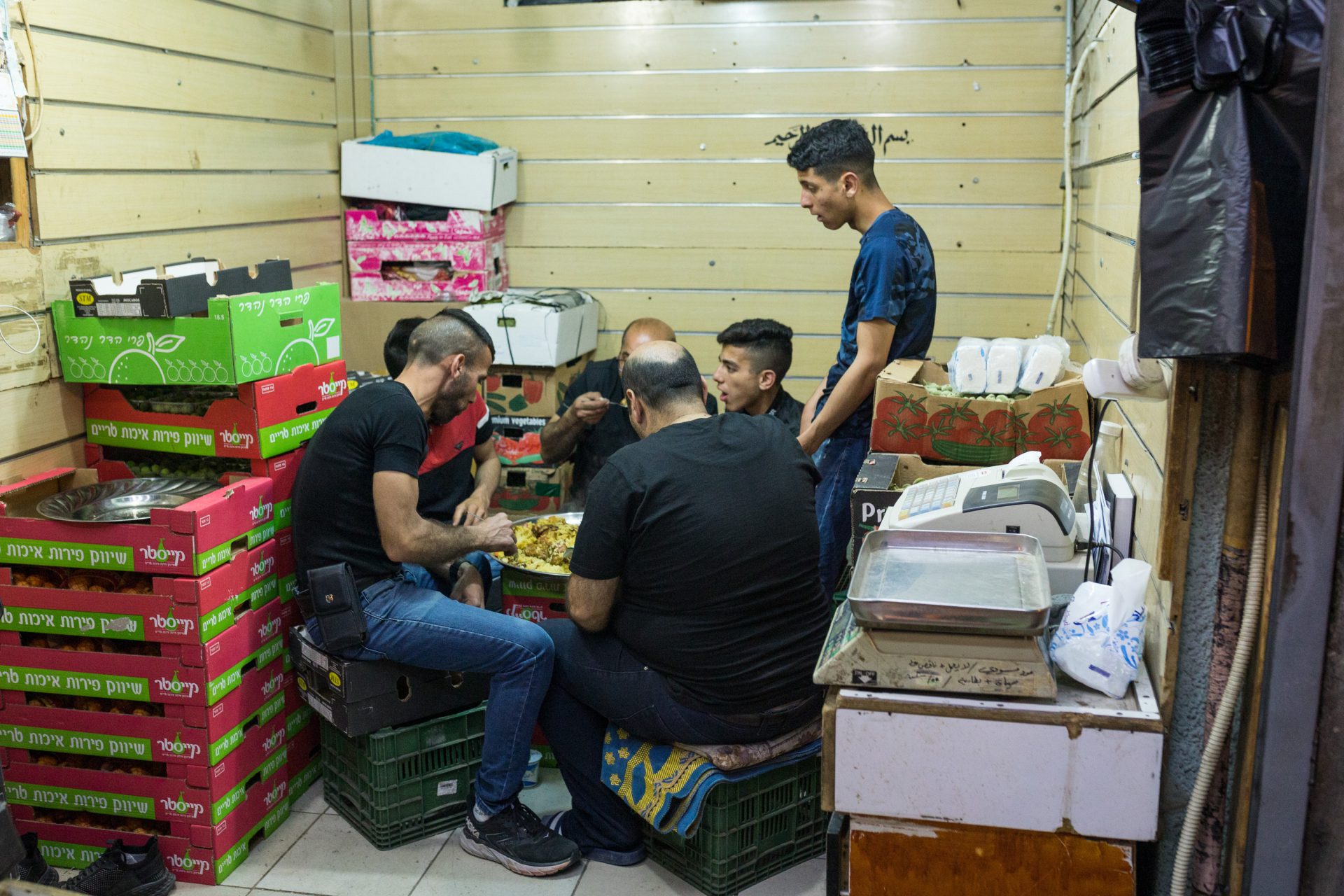
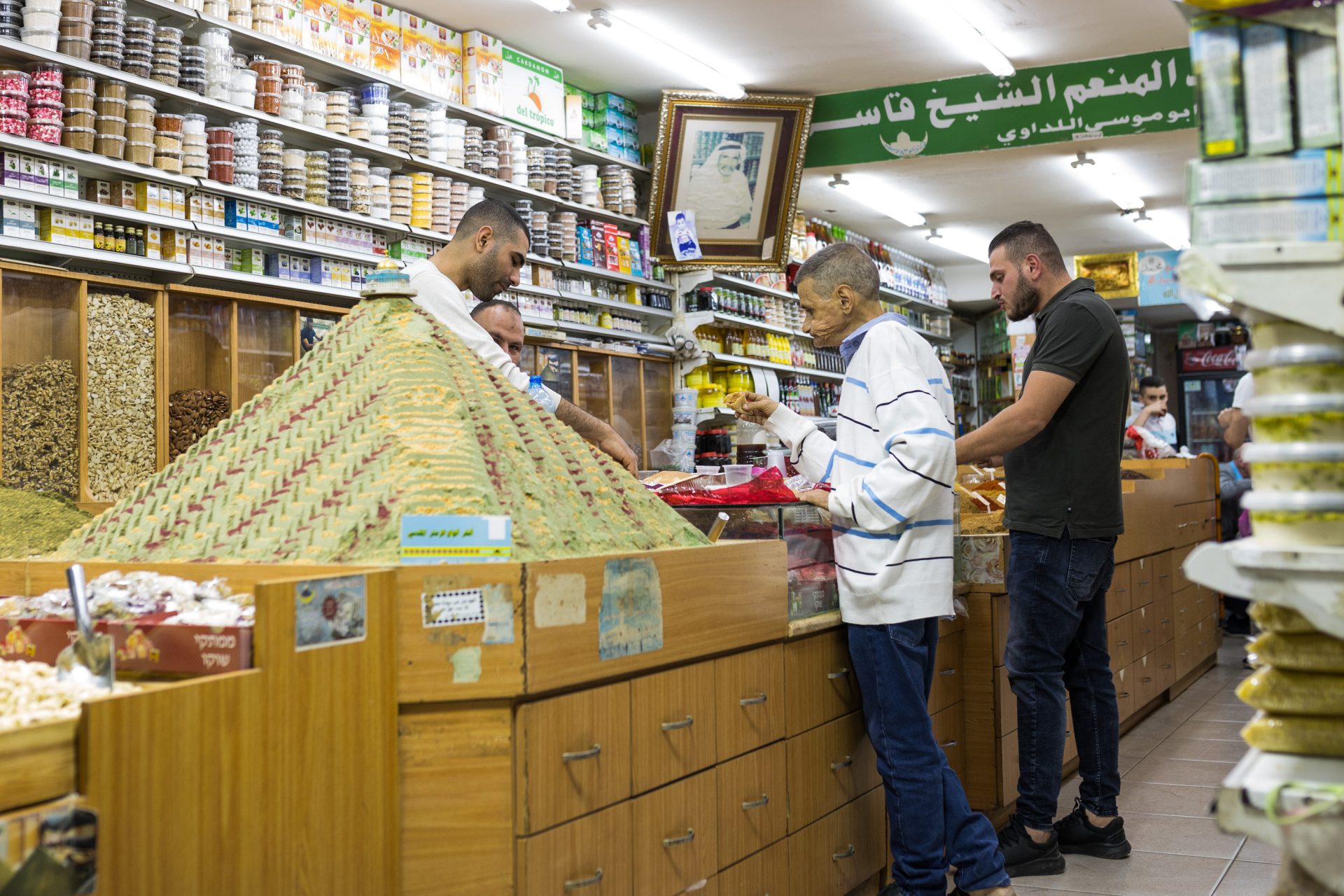
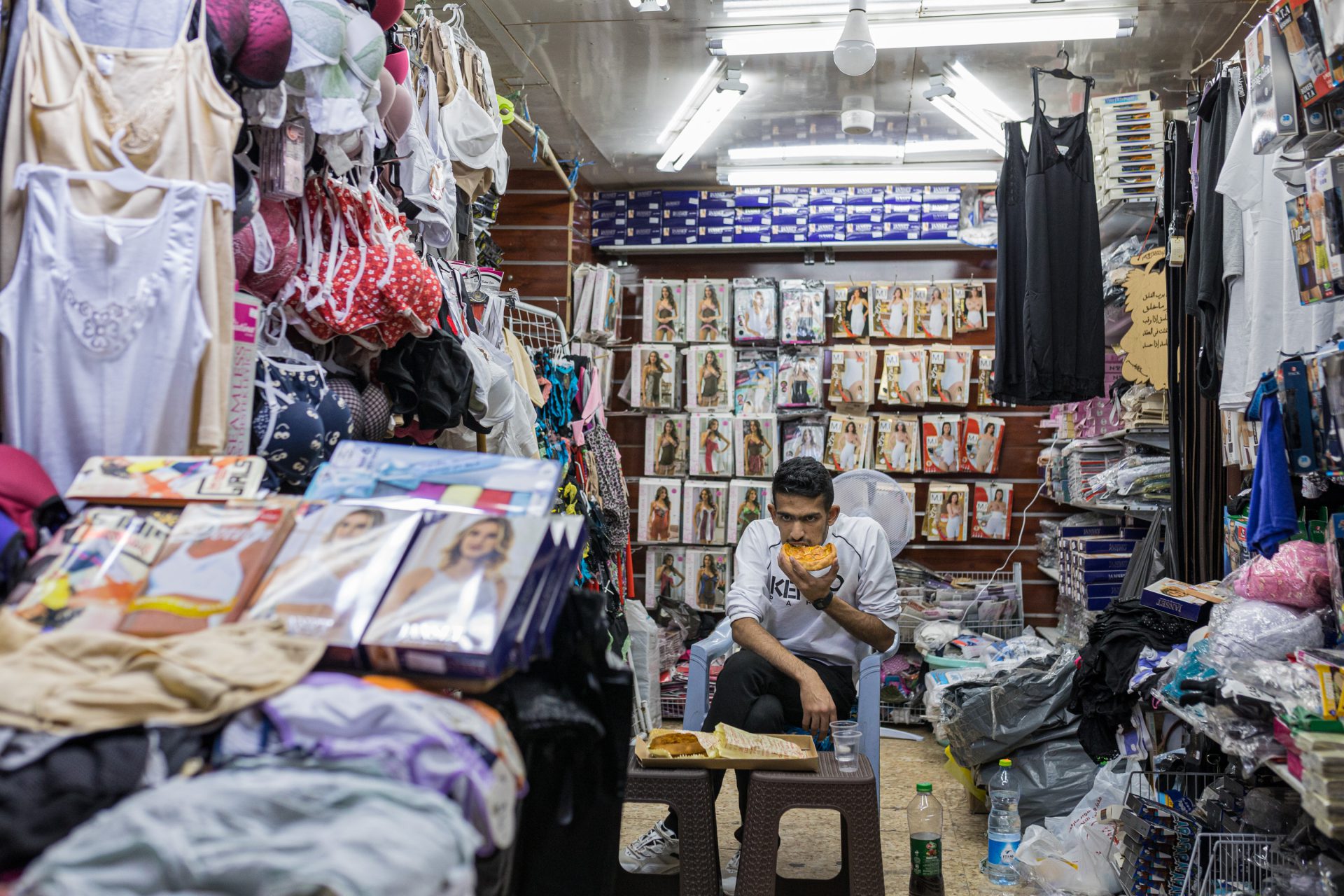
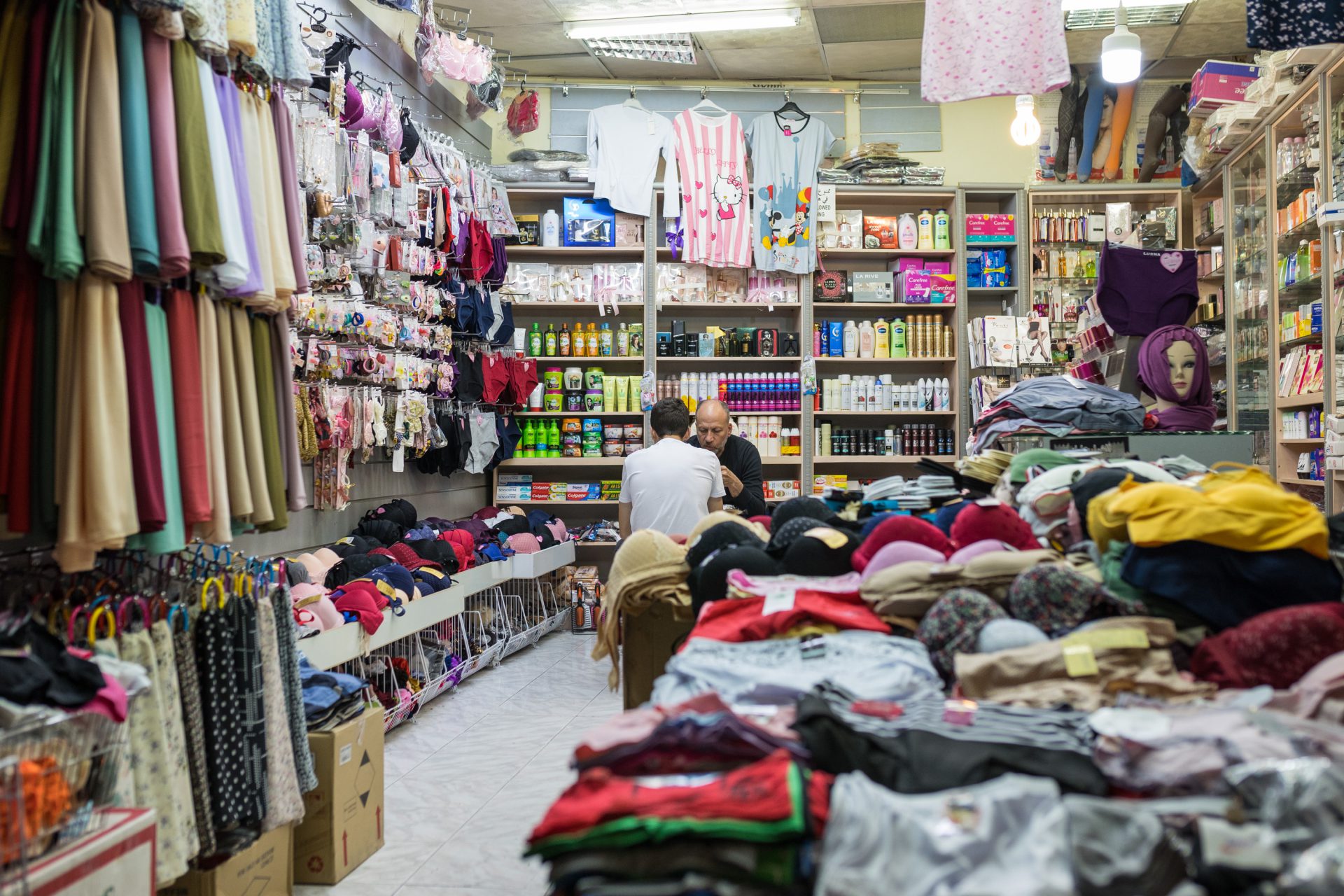
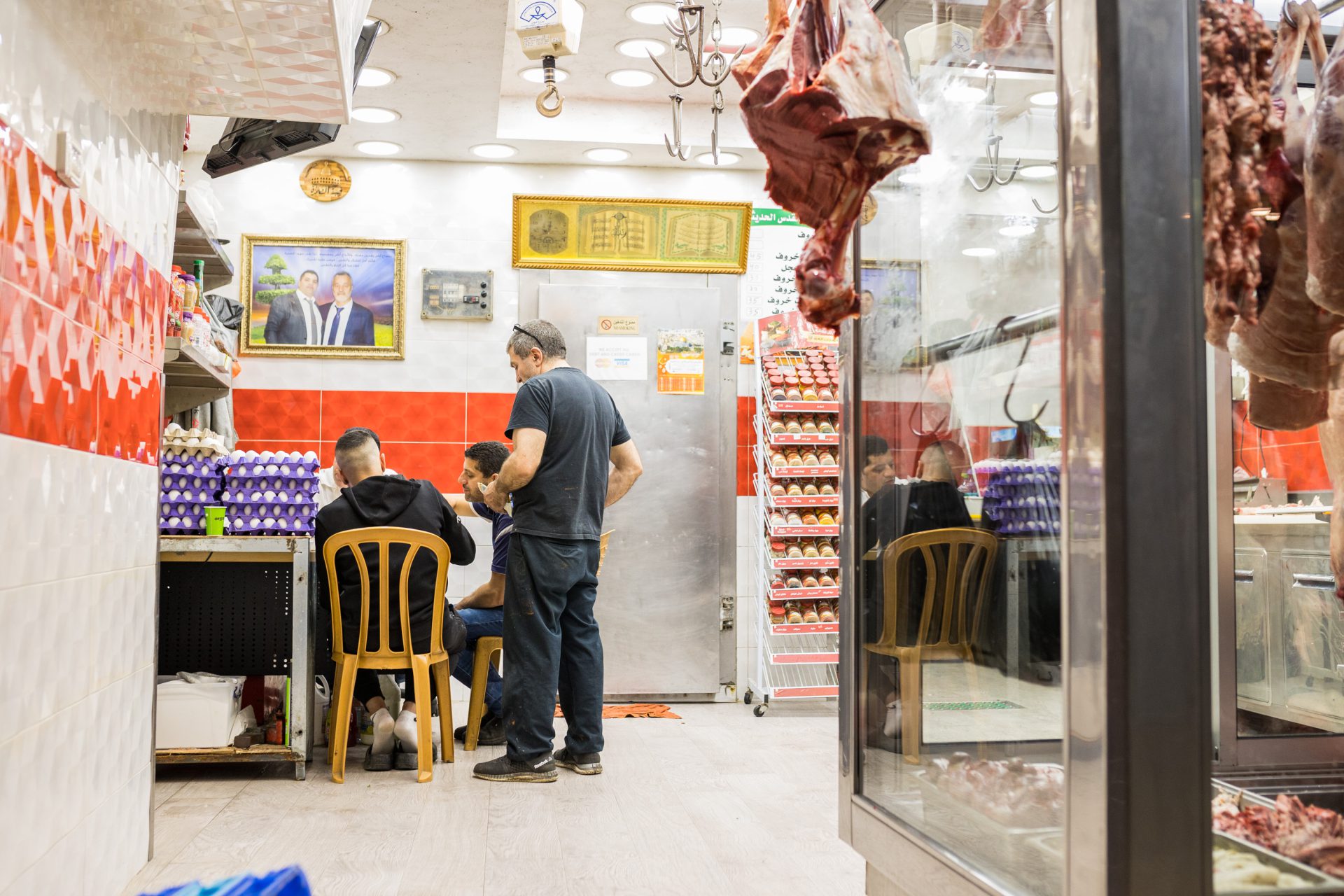
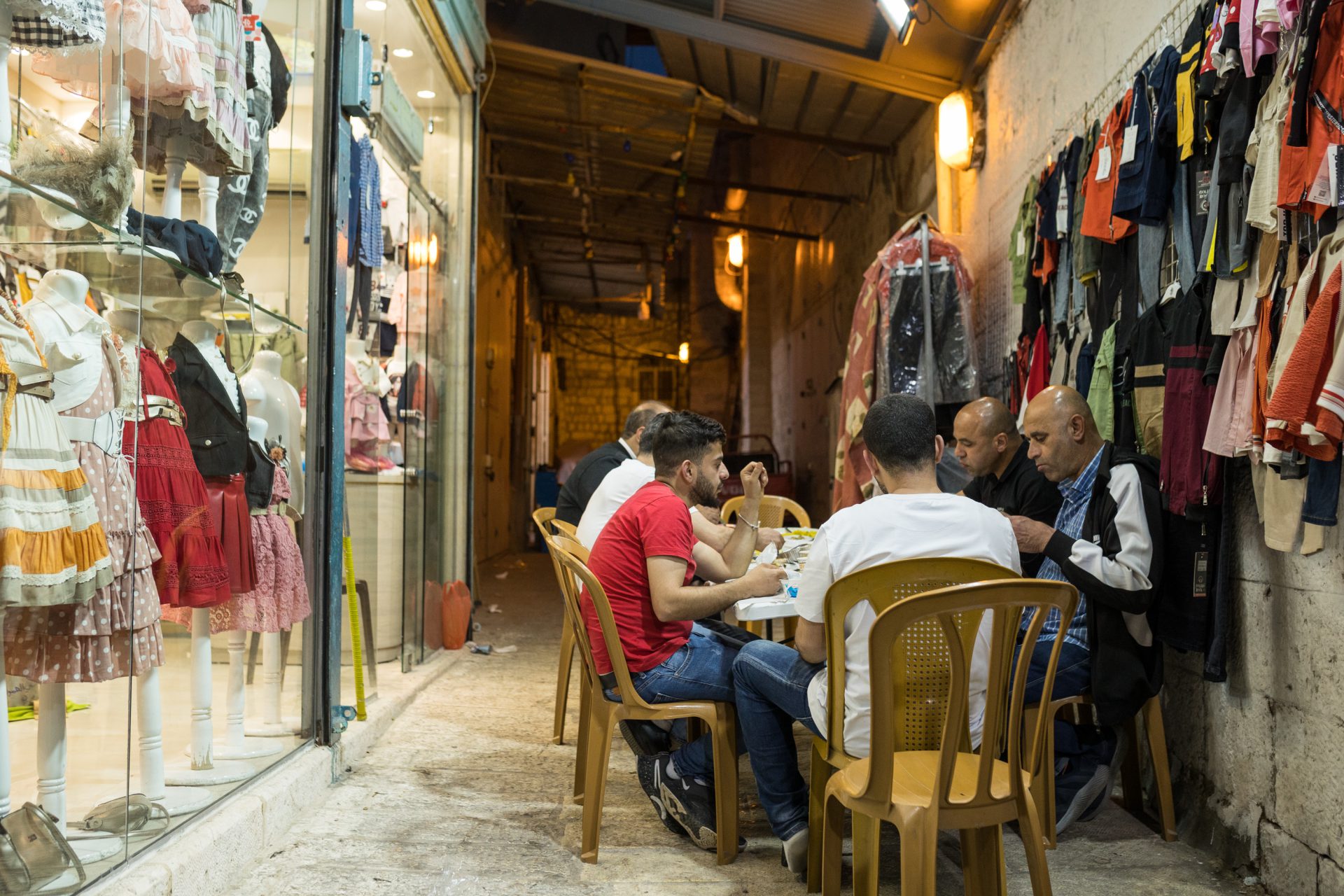
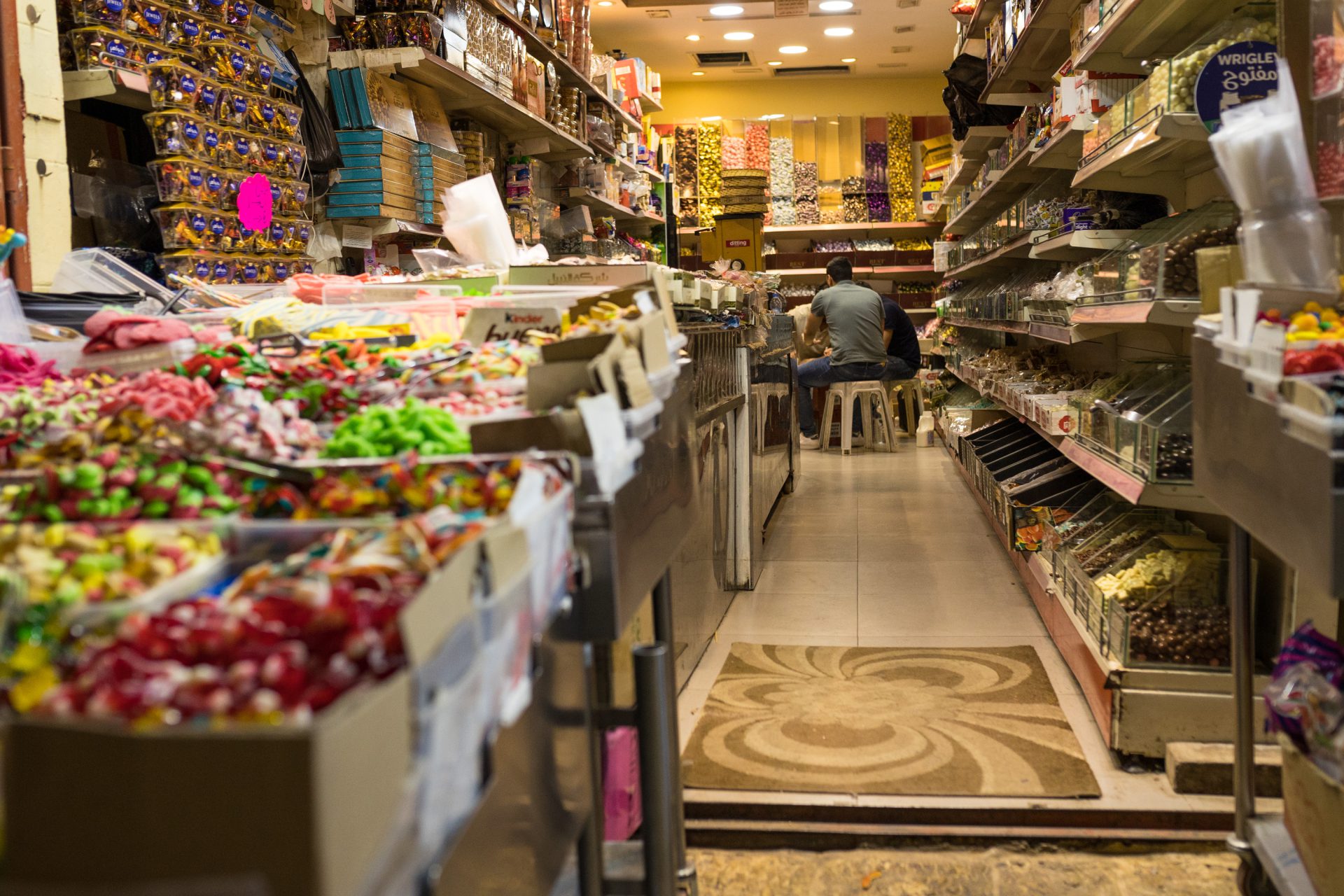
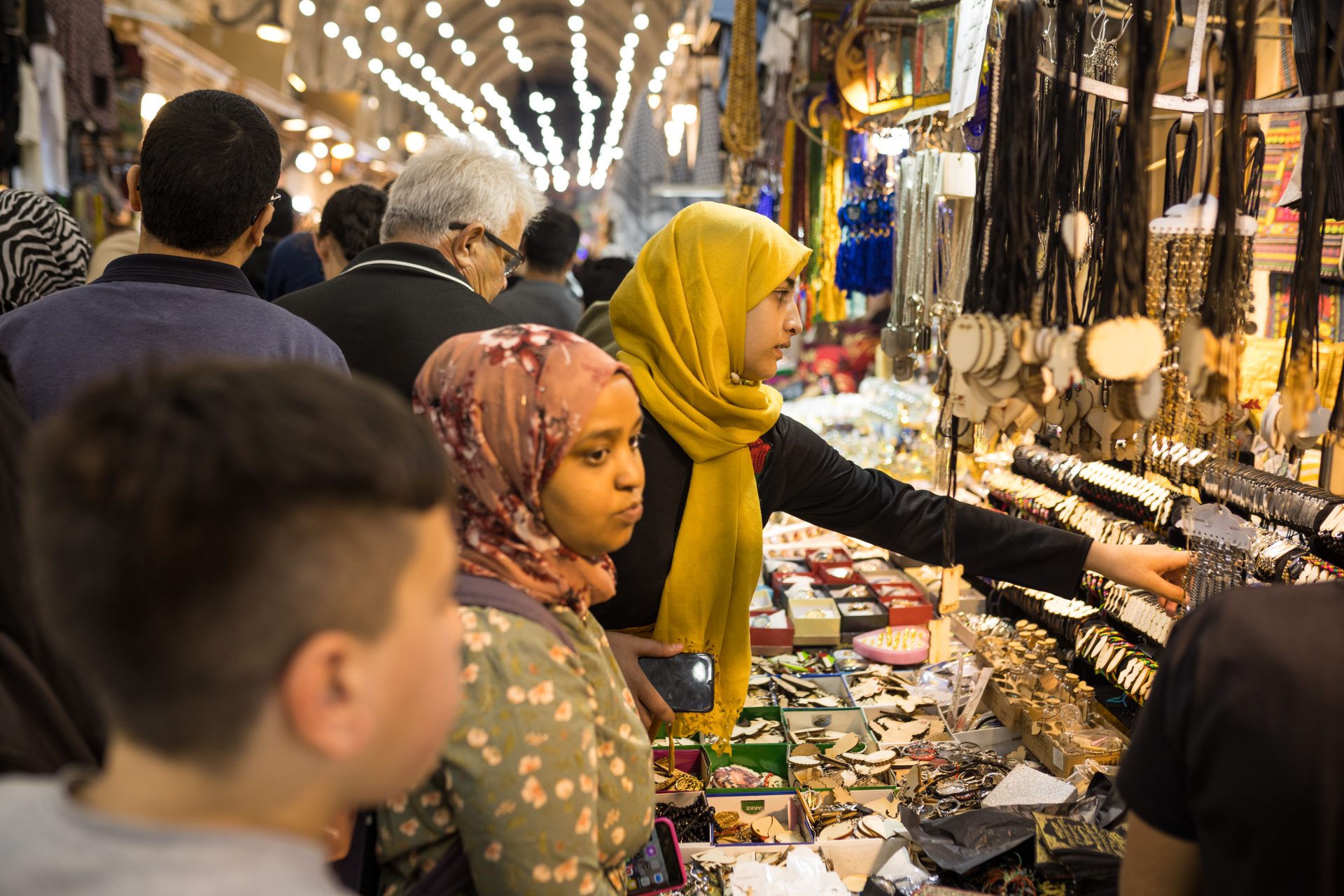
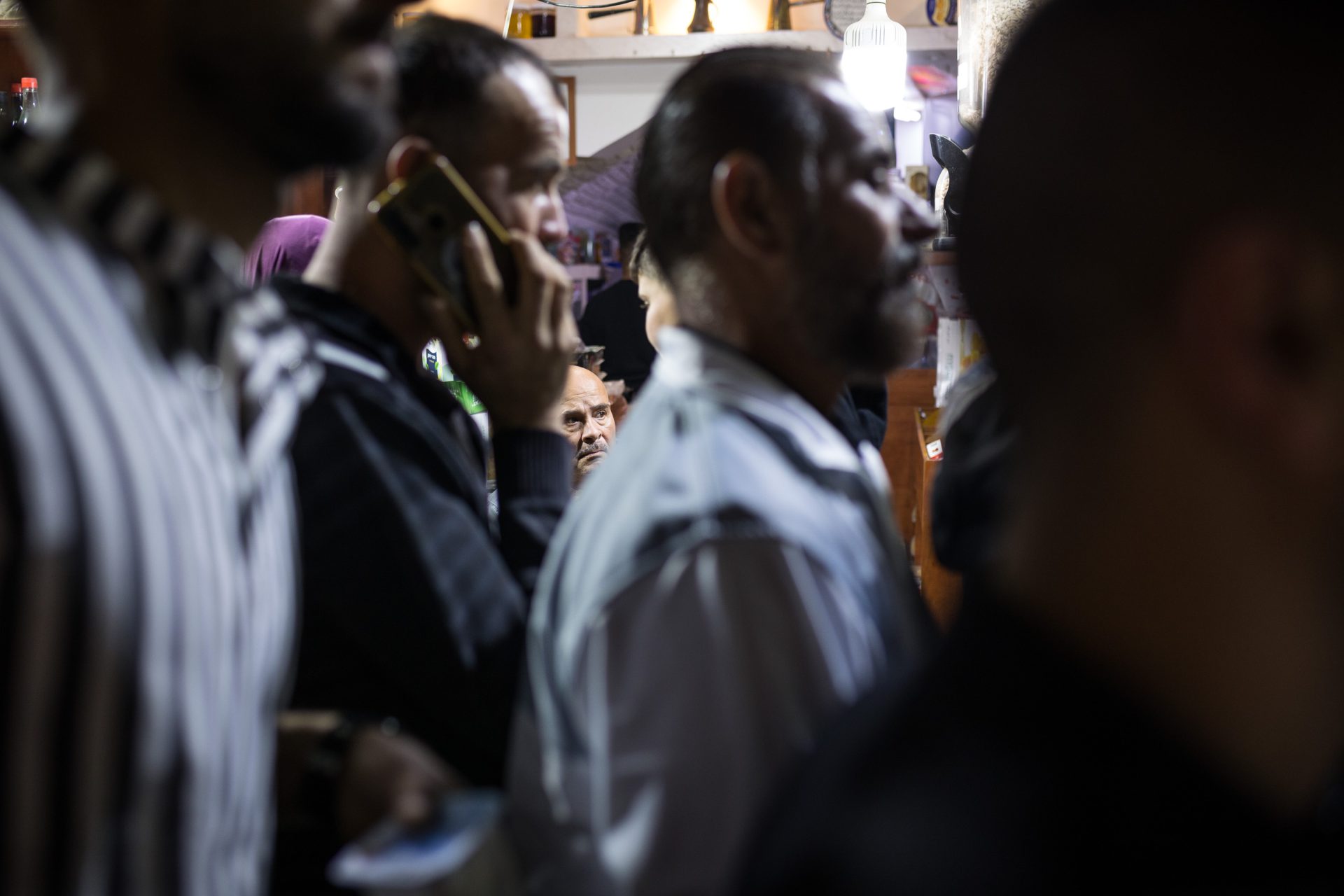
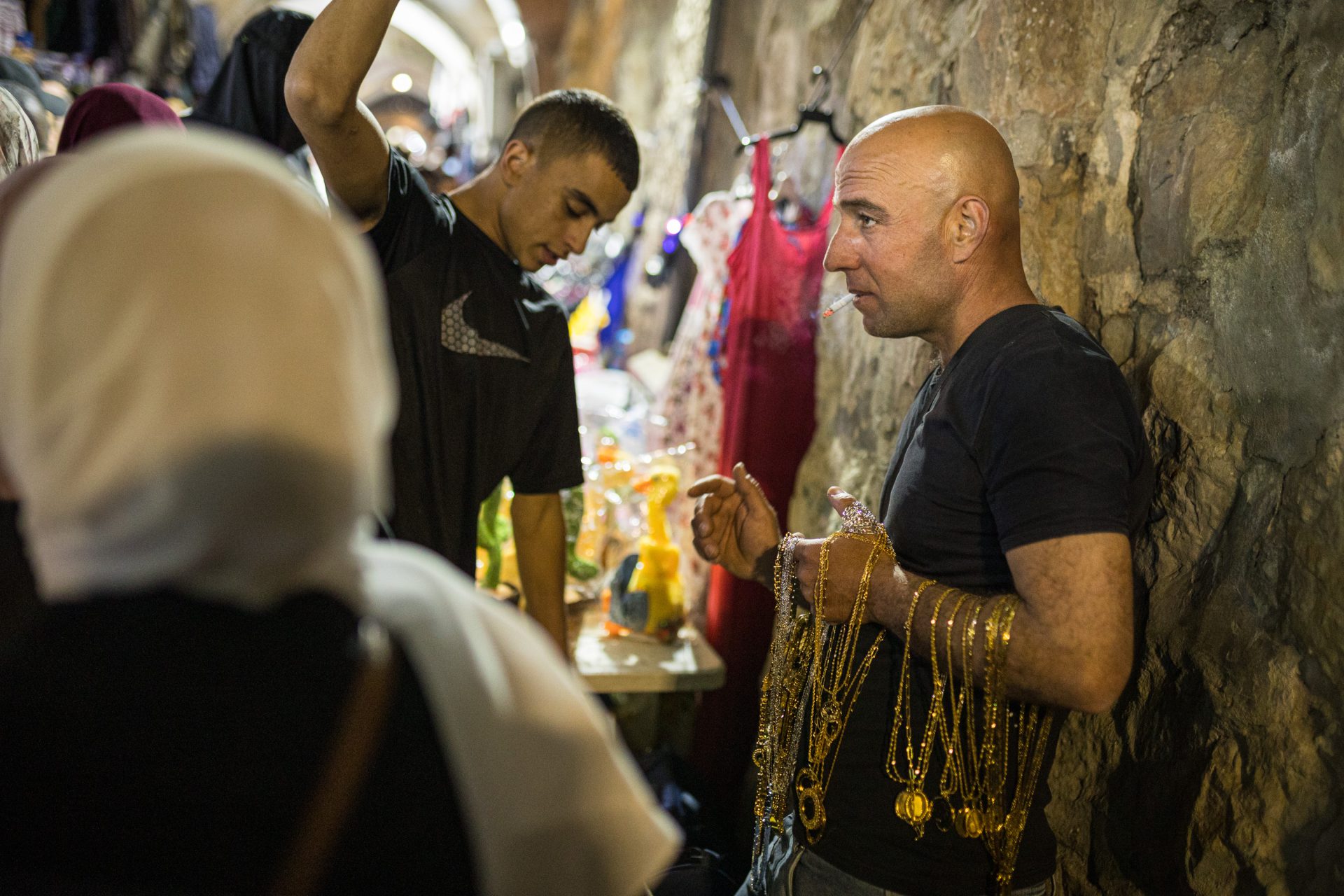
As I kept walking towards the entrance to al-Aqsa, the alleys became narrower and more crowded. Occasionally I had to walk out of the crowds into a side alley to take a break from the hustle and bustle. One of those short breaks into a market alley gave me a chance to photograph the Iftar (meal that ends the daily fast) of the shop owners. Fathers and sons, workers and employers, sat among the jewelry, clothes and souvenirs and broke bread together.
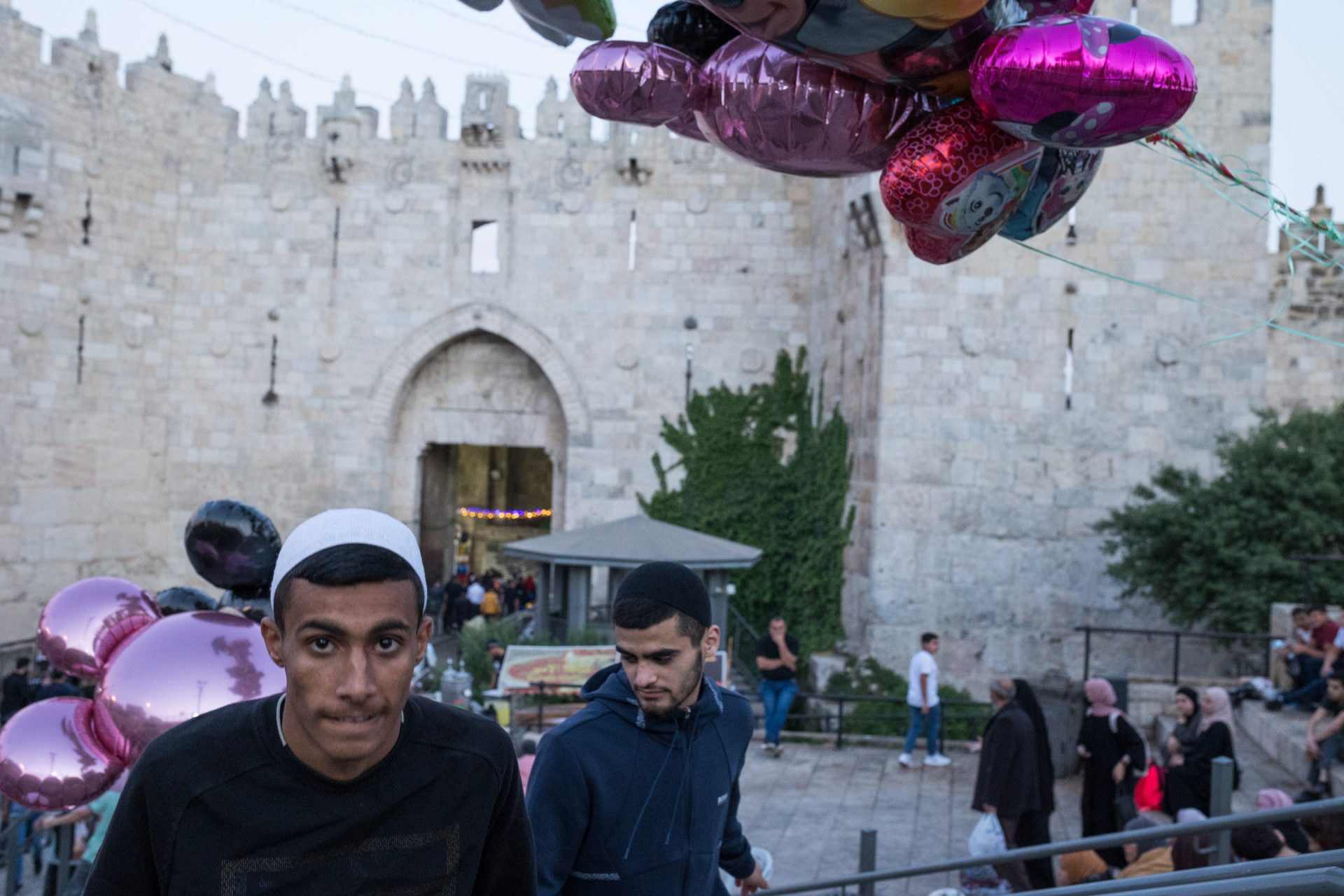
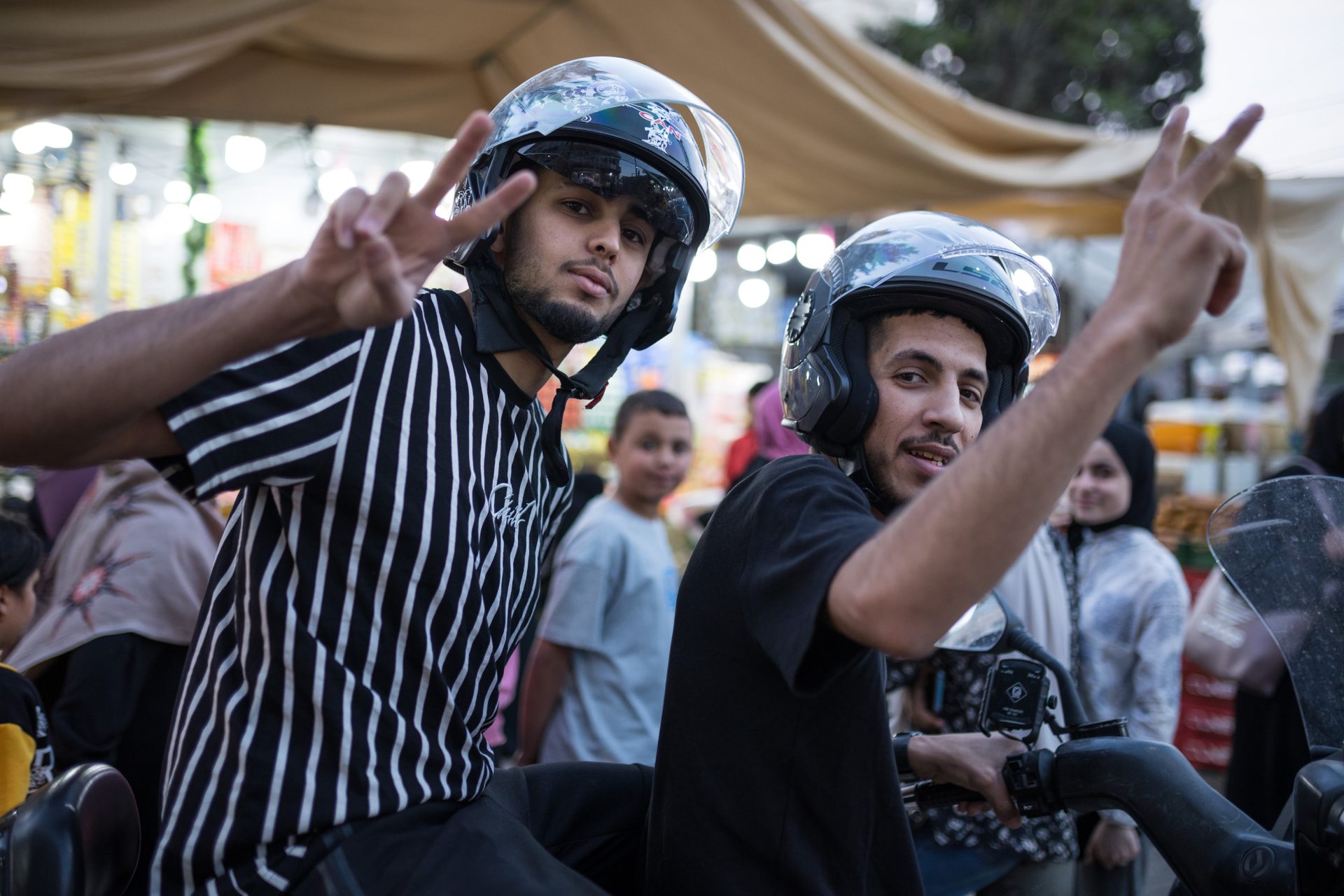
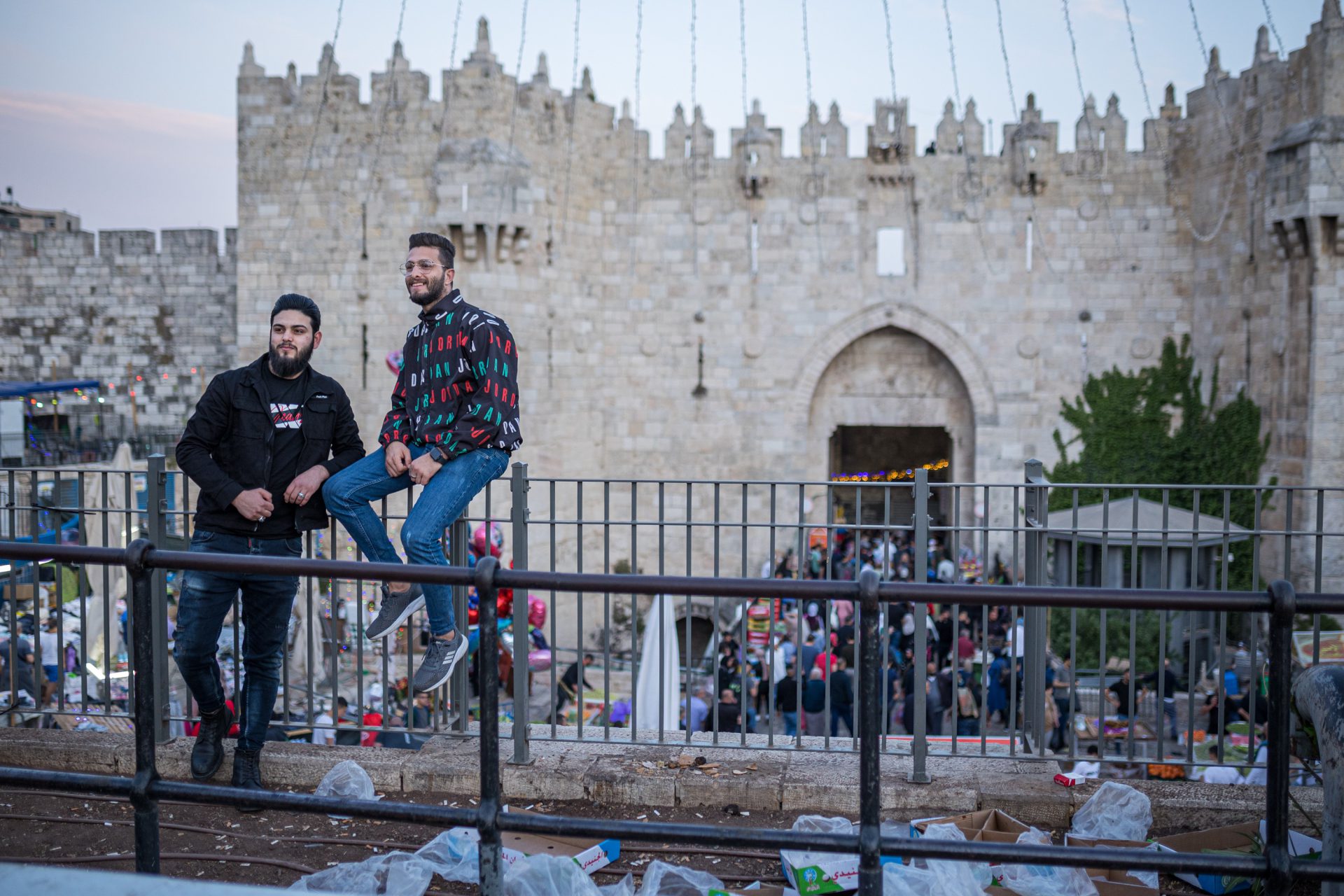
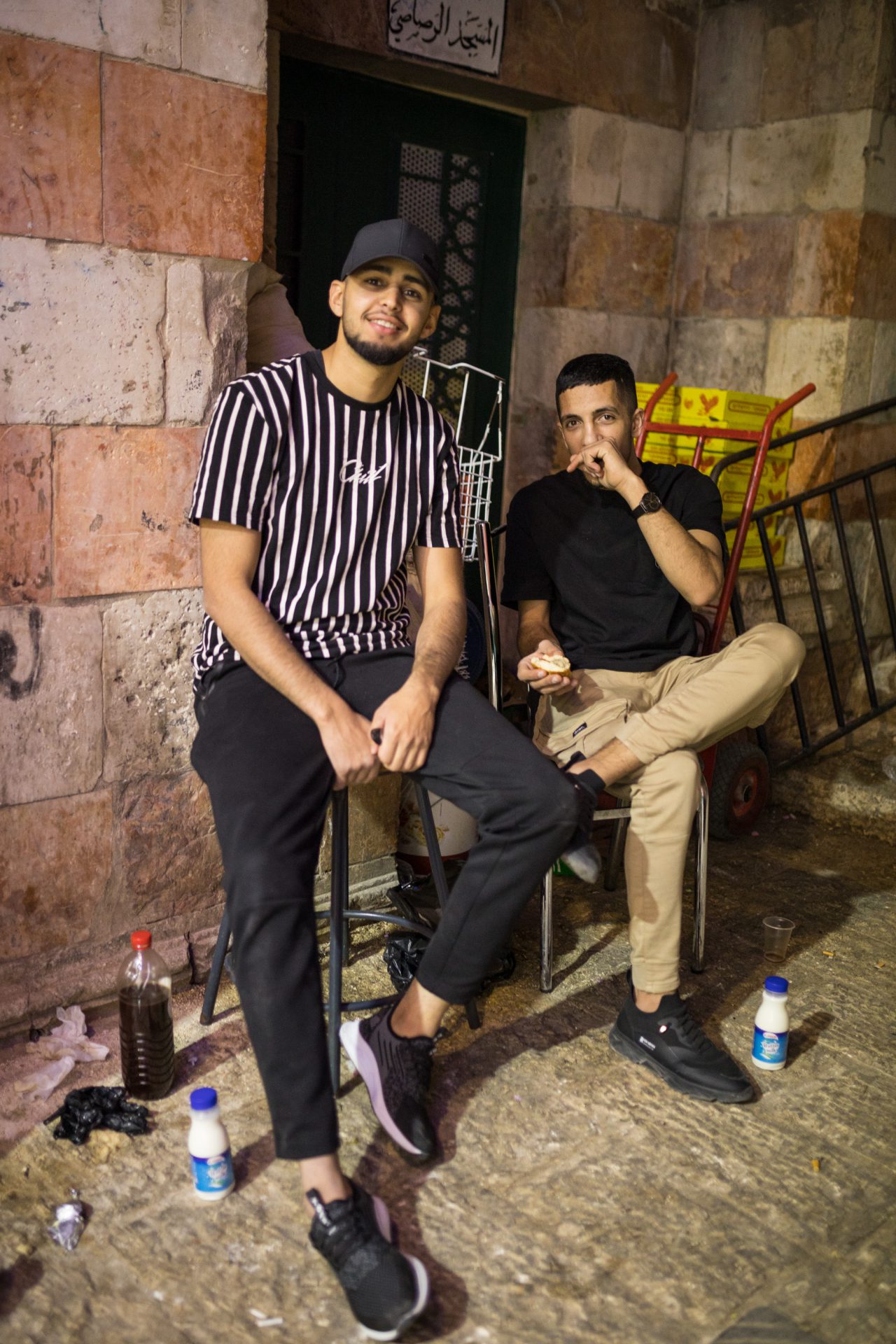
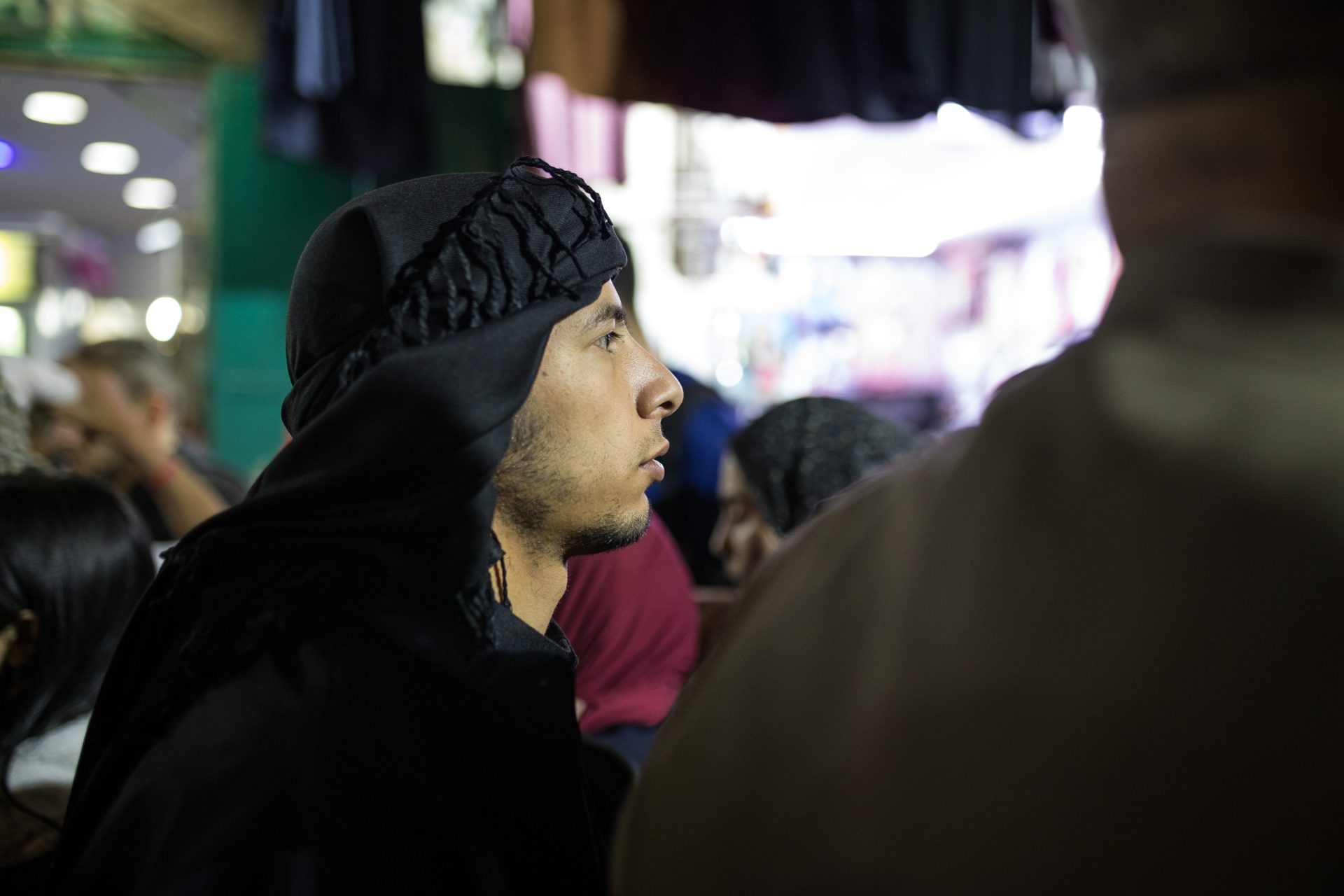
Two friends who saw me standing aside, overlooking the event, asked for a picture. Despite my distaste for the generic “bro-photos” of two people with their arms around each other and smiling directly at the camera, I never refuse to take them. You never know where it’ll lead and what conversation will come out of it. So I took the picture and we began talking. In less than a minute they had already shared with me the food they had and then poured out what they had to say. One previously worked at IKEA in Netanya, the other drives a truck. Young guys, a little over twenty. They said it was a difficult month in the old city facing the police. They couldn’t understand why, according to them, the police usually try to escalate tense situations instead of resolving them. I didn’t argue.
(Remember these guys? They happened to ask me to take their picture again about an hour after I first saw them)
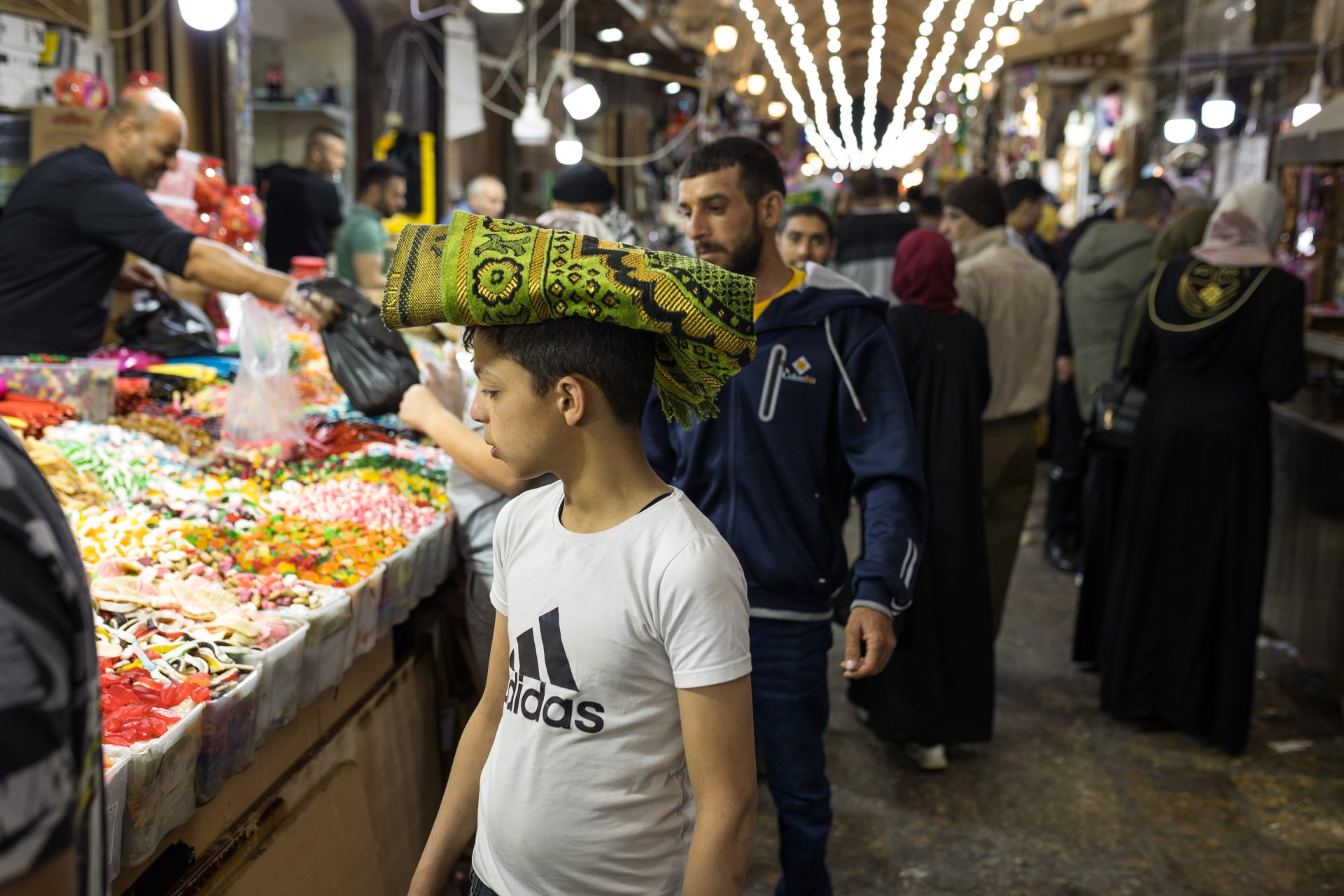
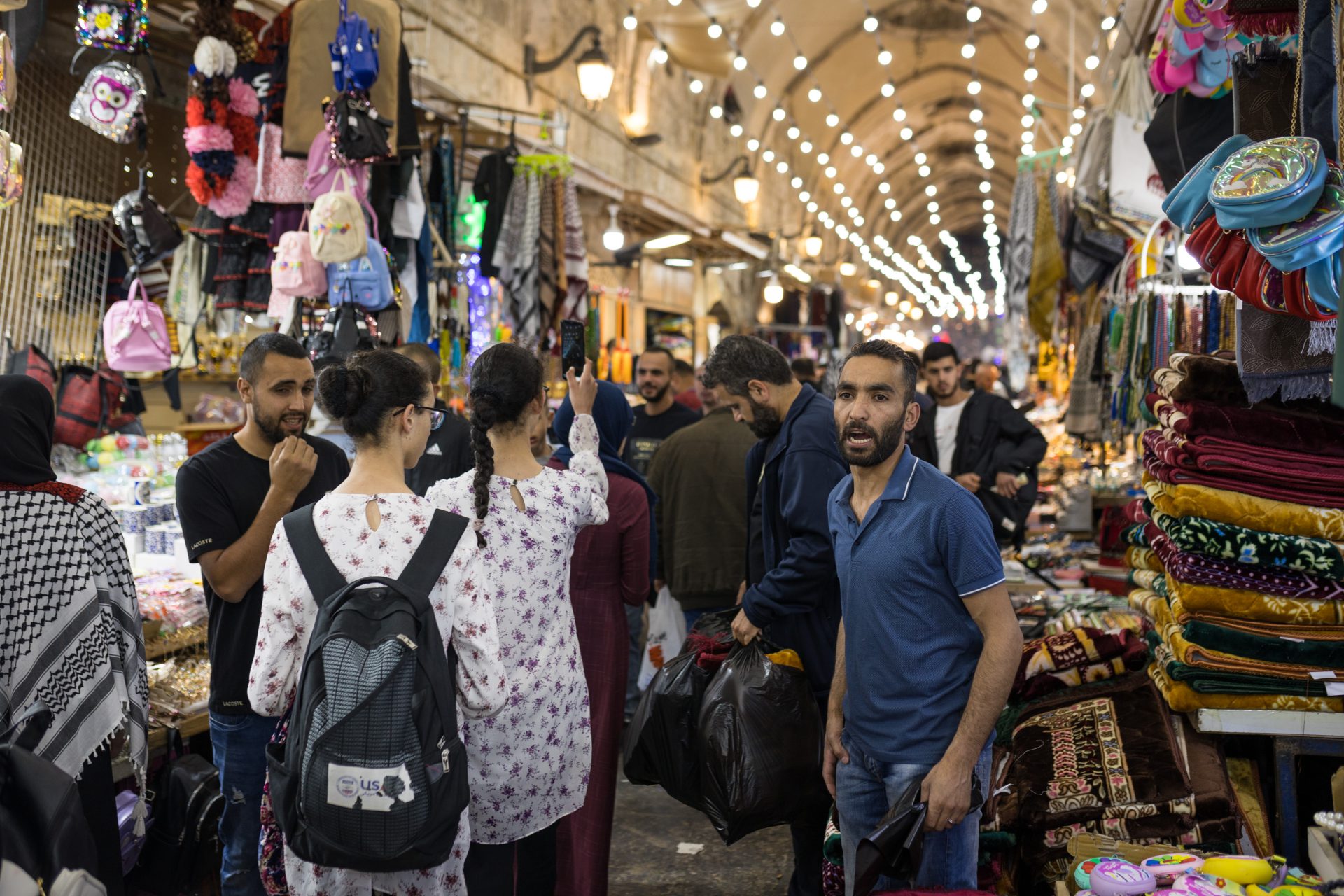
I reached as far as the cotton market. I’ve never seen it this bright, festive and crowded. Non-Muslims are not allowed in al Aqsa during the last ten days of Ramadan (and I also had a train to catch), so that was where I turned back to go out from the Damascus gate. At least, that’s what I’d hoped…
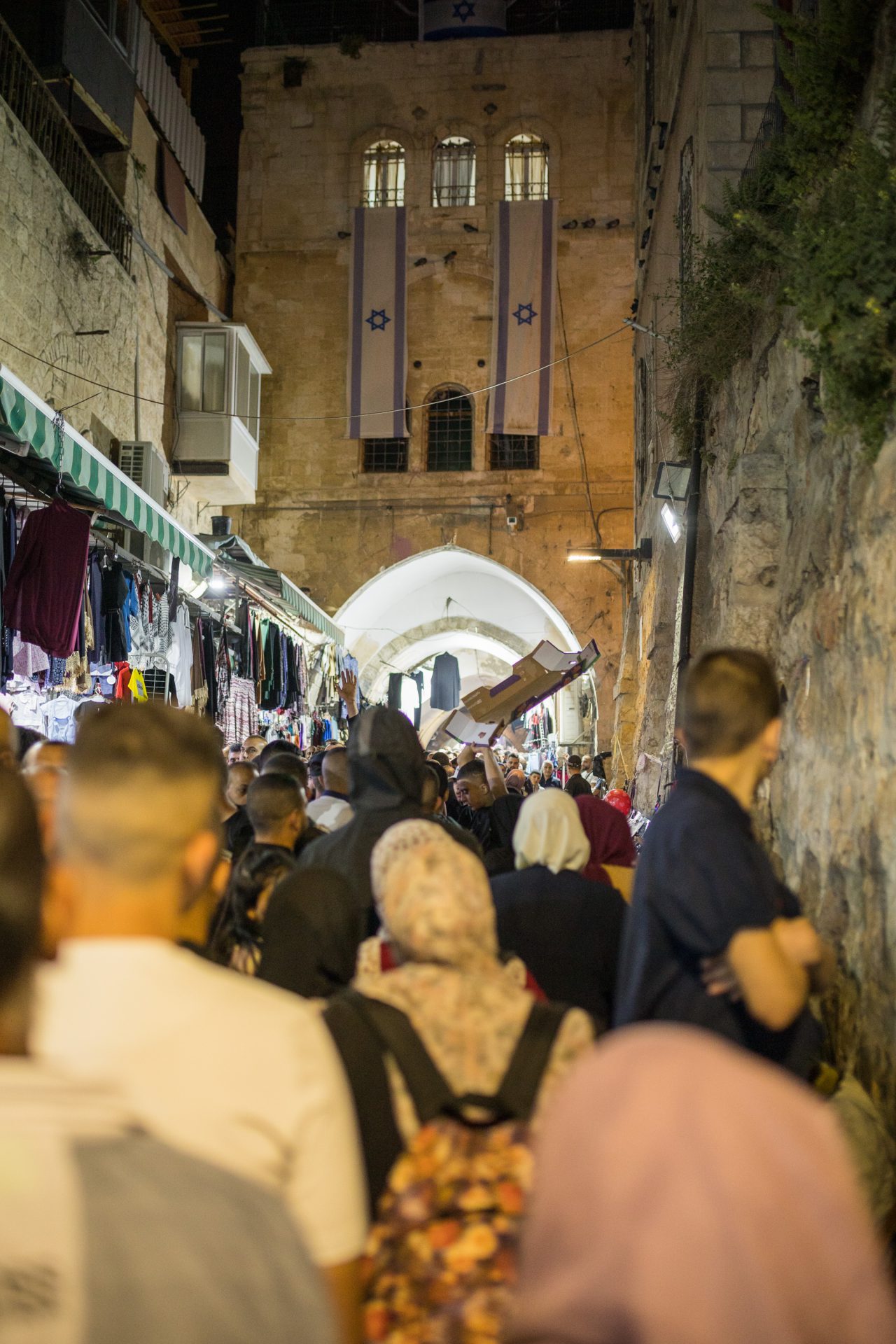
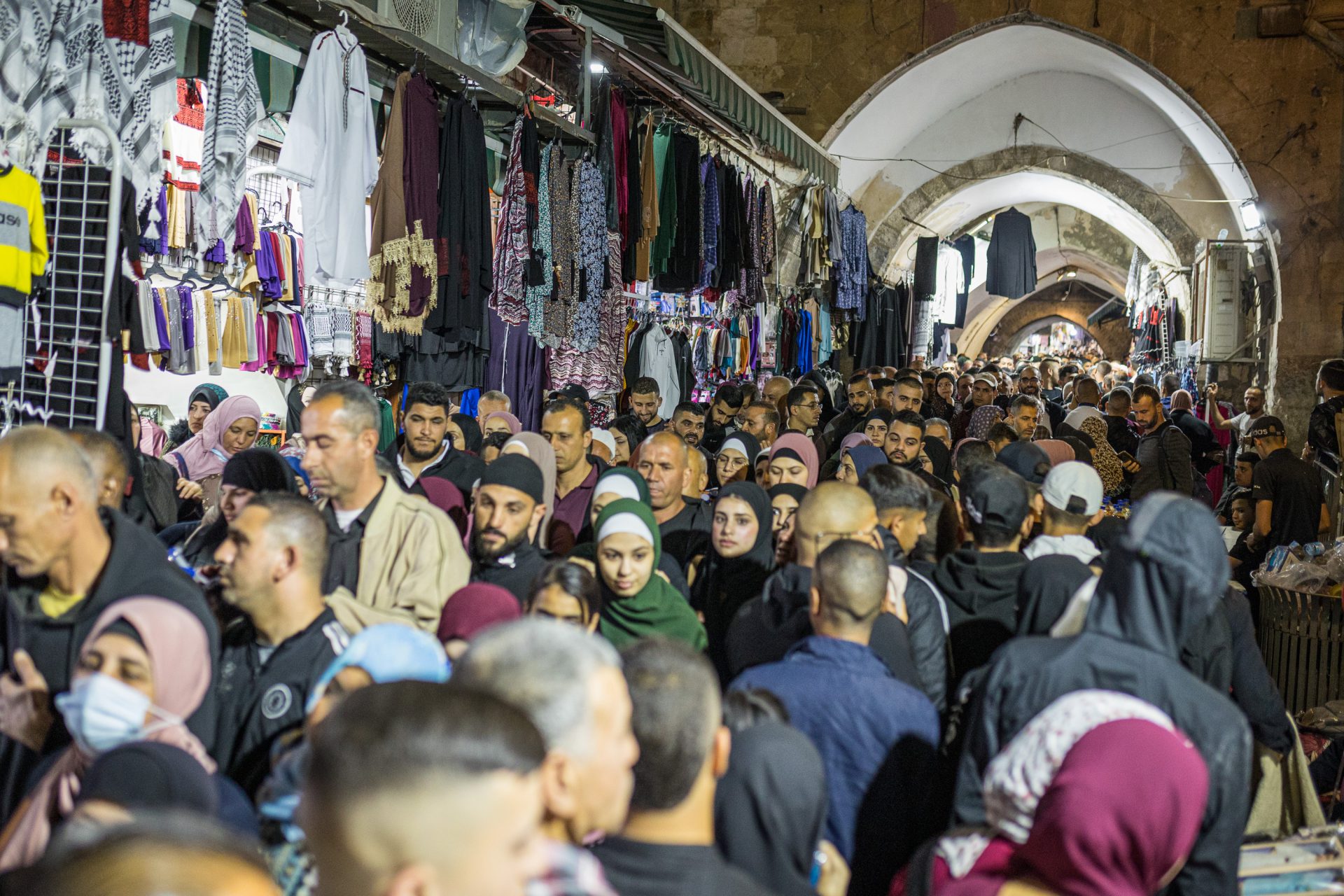
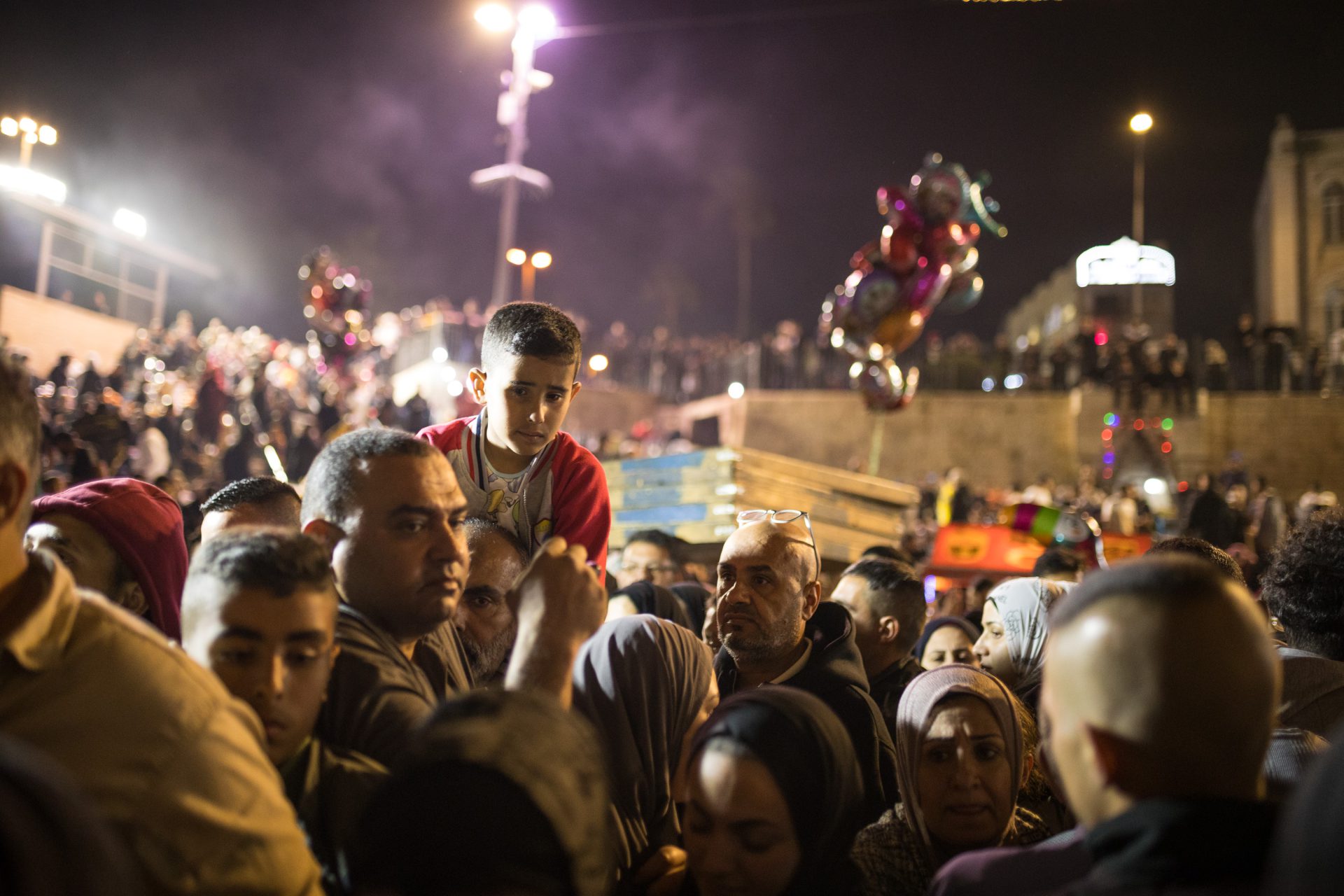
An hour and a half had passed between entering the city and the moment I wanted to leave it. During this time tens of thousands of people flocked in. Depending on which newspaper you read, between 100,000 and 250,000 people arrived in Al-Aqsa in a matter of a few hours. At some points, it was impossible to move.
After the third stop of the Via Dolorosa the alley became so narrow that the two-way flow of people almost stopped. People moved inch by inch towards the gate, cramped and compressed. Children, elderly people, women. A disaster waiting to happen. My time was pressing and I had to get out to make it to the train. The border police (who looked at me as if I were an alien) advised me to wait a bit and continue in the same direction, but then they directed me to another gate.
I recognize large parts of the Old City, but this maze still doesn’t make sense in my head as a whole. So after a few minutes of brisk walking to another gate, I found myself in the exact same spot, in front of the same Border policeman who was amazed to see me again. The crowd was still hardly moving and I set out again vigorously for a different gate.
In order not to make the same mistake again, I asked police for directions (while thinking to myself that although I feel safe talking to people around me, my instinct still sends me to talk to the Jewish, Hebrew speaking police for guidance). I saw the apprehension in their eyes. While I saw people celebrating, their eyes kept scouting for potential violence. As we were talking, there was a thing with a teenager that put them on alert. A type of chicken and egg scenario. One policeman scolded me and another one advised. In any case, they both said that I’m not to continue where I was going, but instead go the exact opposite direction – to reach the Western Wall and leave from there. They even said they would let me go through the Western Wall tunnels to get there.
The tunnels were already closed, the train to Tel Aviv was long gone and the only goal I had was to get out of the old city walls. I kept walking in the direction where I thought the Western Wall was. After a few minutes I found myself, again, at the exact same spot near the border policemen. I was living “Hedgehog Day”, only I was running around with a bag and a camera and Andie MacDowell wasn’t there. I was debating whether to listen to the police and walk to the Western Wall through the extremely narrow and crowded alleys where I was before or just continue to the Damascus gate until I get out and just get it done with. It was Muslim quarter kind of day and the Damascus Gate won. I walked into the swarm of people that was crawling delicately and patiently towards the exit.
After a few minutes in the stream, I became a part of it, with no option to go back or forth independently. Then I began to hear muffled calls coming from the people coming in: someone called, others answered. Then again. And again. And at the end everyone yelled together. The calls came nearer and I was being drifted towards them. Within a few seconds the words became clear: Allahu Akbar. God is greater. So far, so good. Someone called, others answered. Then the second part began: “In spirit and blood we will redeem Palestine” and immediately after that the other infamous slongan “In spirit and blood we will redeem Al-aqsa”. This is where I started to feel very uncomfortable.
In general, crowded masses are unpleasant. Blatantly being a stranger in a crowd isn’t that great either. Being a stranger in the midst of nationalist calls- well, that’s already a real bummer.
Thoughts that went through my mind: “Am I going to be that stupid leftist in the paper tomorrow?” “Was the cops’ paranoia justified and I’m blind to the danger?” And also “Could it be that in order to save a few minutes of walking and prove a point I risked my life?”
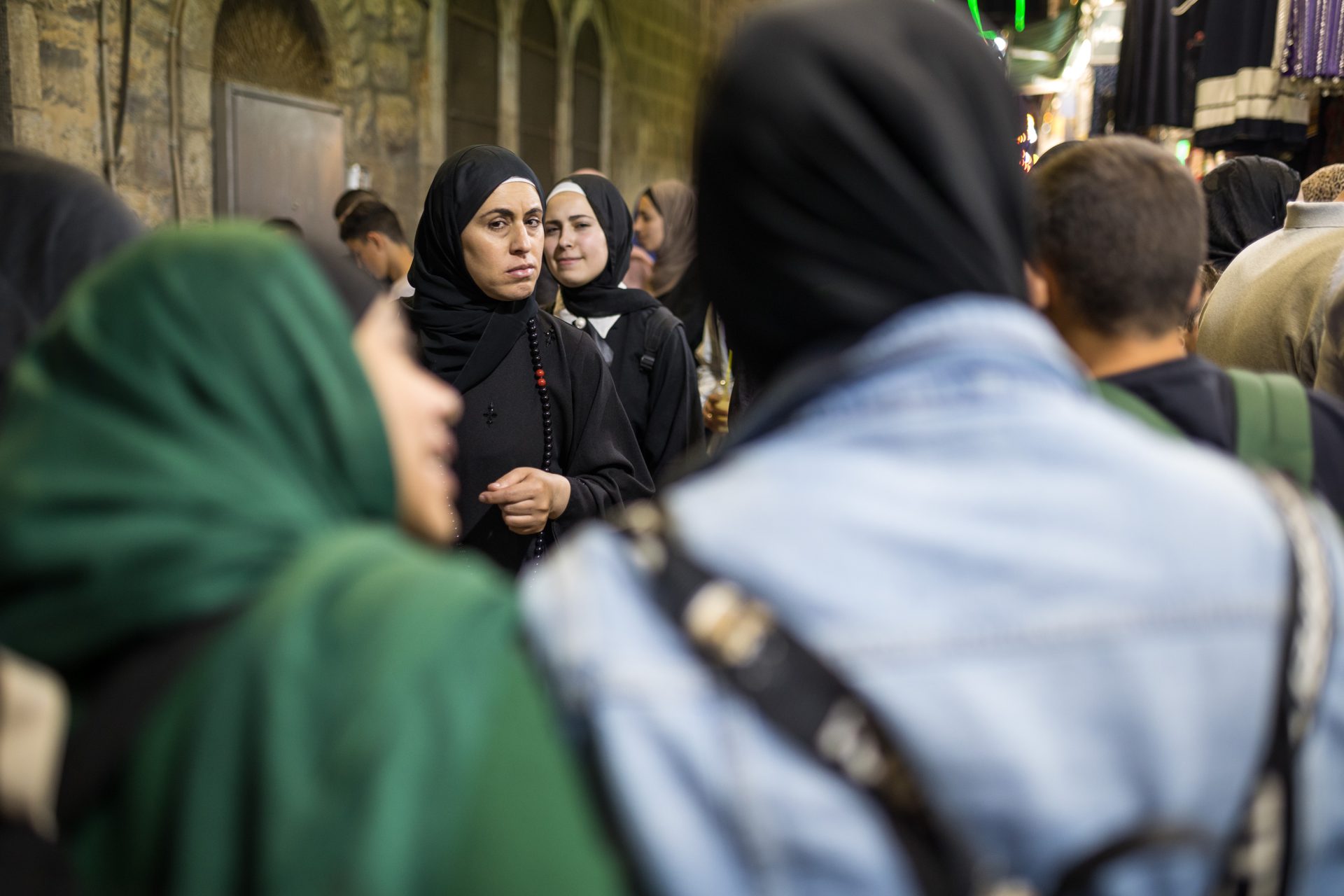
I kept moving at the edge of the stream and occasionally glanced at the shouters. Youth in their mid-teens or early twenties. Energetic and stuffed with hormones, yelling mainly to themselves, making sure they’re seen. The adults reacted with silence or even a half smile, but did not join the shouting. Who wants trouble on a day like this aside from these kids?
I realized that I knew them because I had seen them many times before, just looking different: wearing a kipa on their head and a talith under their cloth. Nationalism and religion mix all the time in this country.
I tried to normalize the situation in my head: in other places in Israel, too, I sometimes had to move away from groups that had a violent energy around them. In the current situation, with all the elderly and women, they had some bark and very little bite. After all, these calls are for their friends, not for me. They are not even for the cops because the calls faded away as they got closer to the policemen. In retrospect, it seemed to me that I should have just started photographing. Photographers are usually seen as spectators, both in their own eyes and in the eyes of others. But at that moment I was a tourist, who is also a Jewish Israeli, for whom these calls are a trigger.
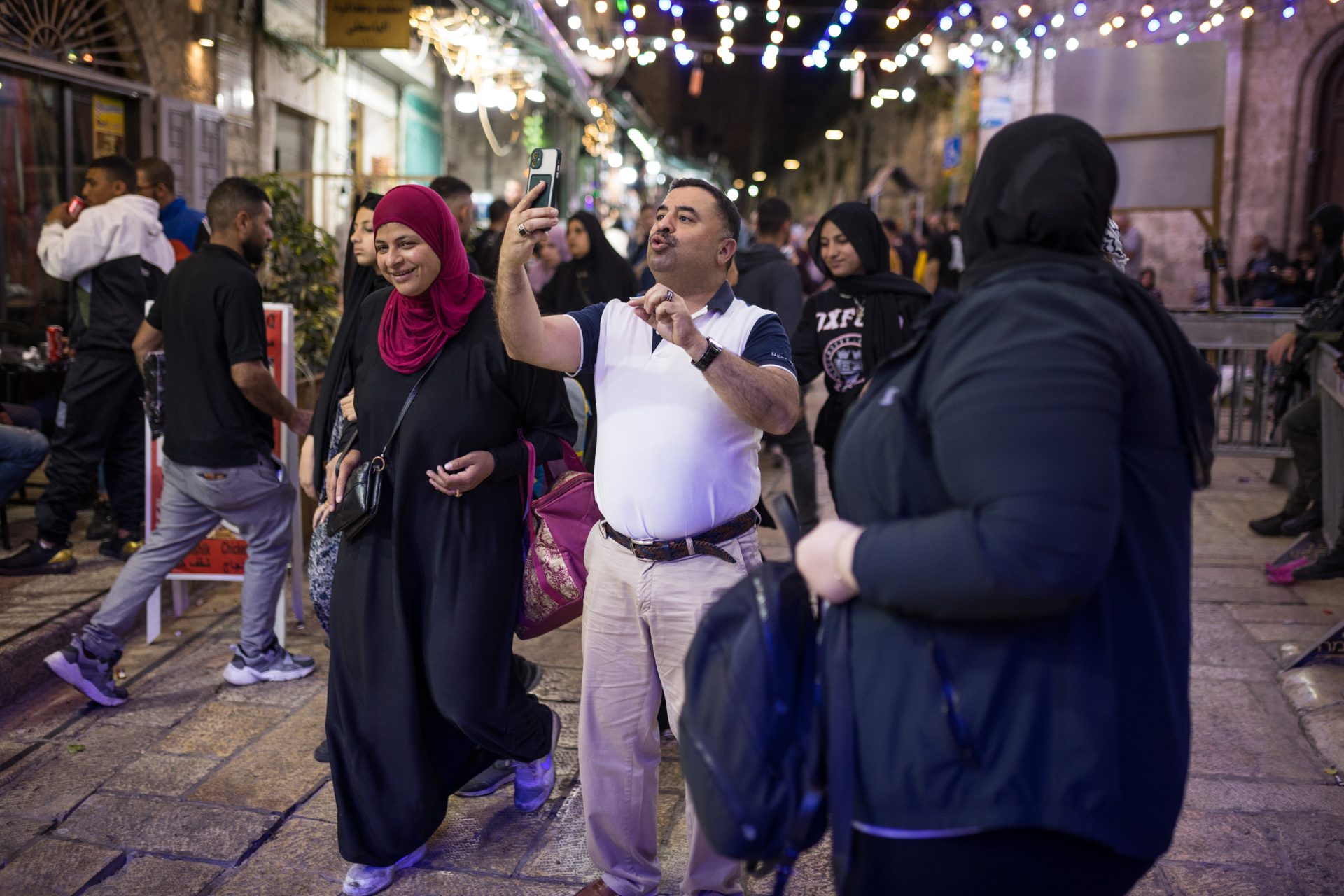
(The guy in the picture has nothing to do with the story, he was really quiet and polite)
In the end I made it out. The cool Jerusalem air replaced the stuffed air between the walls. The smell of shish kebab was everywhere, a guy tried to sell a soap bubble gun and thousands were still going in through the gate into the walls. What a night … Lailat Al Qadr!